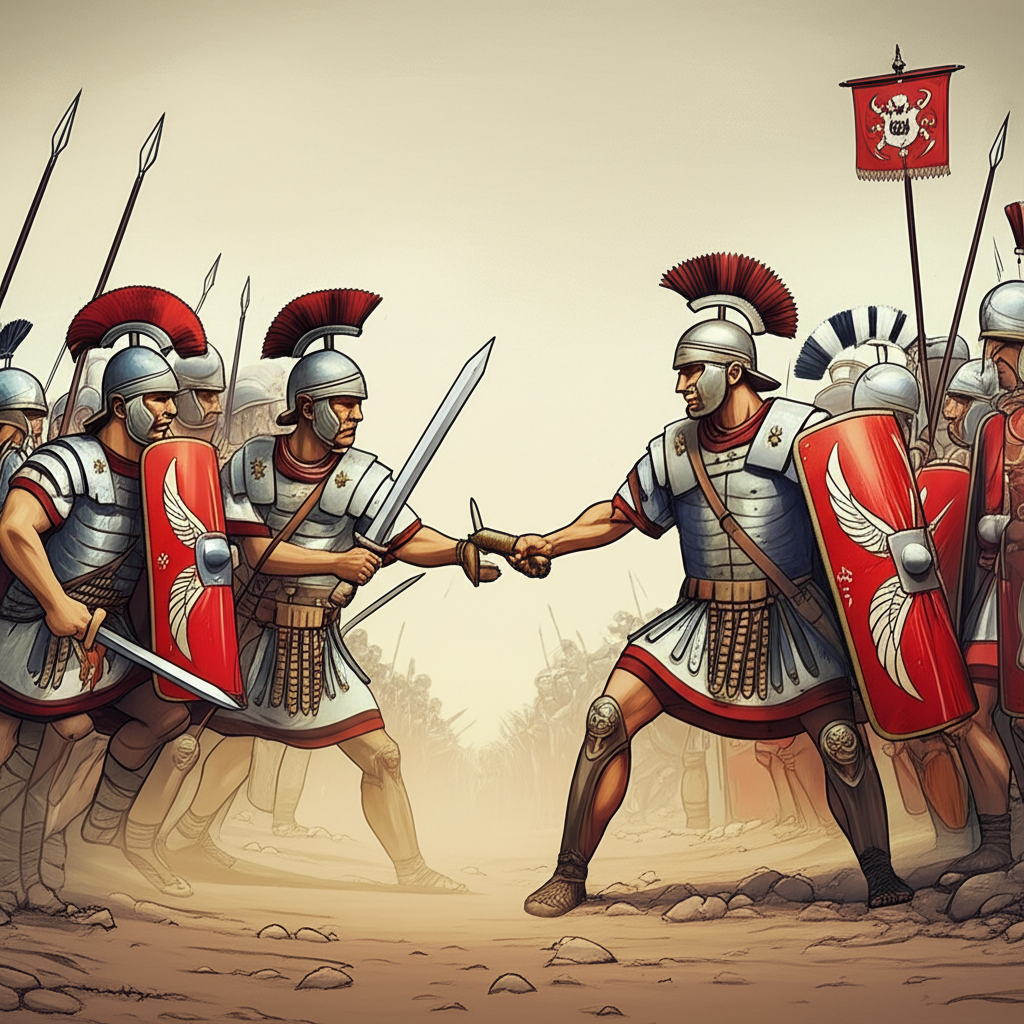
The struggle between early Rome and the Latin League was a defining conflict that shaped the Republic’s ascent to power in Latium. This was not merely a series of battles for territory, but a strategic contest for regional hegemony. The League, a confederation of cities and tribes sharing common language and religious customs, initially viewed Rome as a preeminent partner. However, as Roman influence expanded, this relationship soured, transforming into a rivalry to determine the dominant power on the Italian peninsula.
Roman strategy during these conflicts evolved beyond simple military conquest. Following key victories, such as the decisive Battle of Lake Regillus, Roman leaders demonstrated a sophisticated understanding of political integration. Instead of dismantling defeated Latin cities, they often absorbed them into their own political structure through a system of alliances and grants of citizenship. This policy proved immensely effective; it neutralized former adversaries by giving them a stake in Roman success, thereby converting potential enemies into a vital source of manpower for the legions.
The eventual dissolution of the Latin League after the Latin War (340–338 BC) marked the culmination of this grand strategy. Rome systematically dismantled the confederation, dealing with each city individually and binding them directly to itself. This prevented any future collective action against Roman authority. By replacing a league of equals with a hub-and-spoke system of alliances centered on Rome, the Republic secured its dominion over Latium and established a foundational model for its future expansion.