The cataclysmic eruption of Krakatoa in August 1883 did more than reshape the Sunda Strait; it profoundly altered the Earth’s atmosphere, painting skies across the globe in unprecedented colors. The volcano ejected an immense plume of ash and gas high into the stratosphere, far above weather systems that would typically disperse such material.
Central to the ensuing phenomena was the vast quantity of sulfur dioxide released. This gas reacted with atmospheric water vapor to form microscopic droplets of sulfuric acid, creating a stable, high-altitude haze of sulfate aerosols. Unlike larger ash particles that fell out of the atmosphere relatively quickly, these fine aerosols remained suspended for years, circling the planet on stratospheric winds.
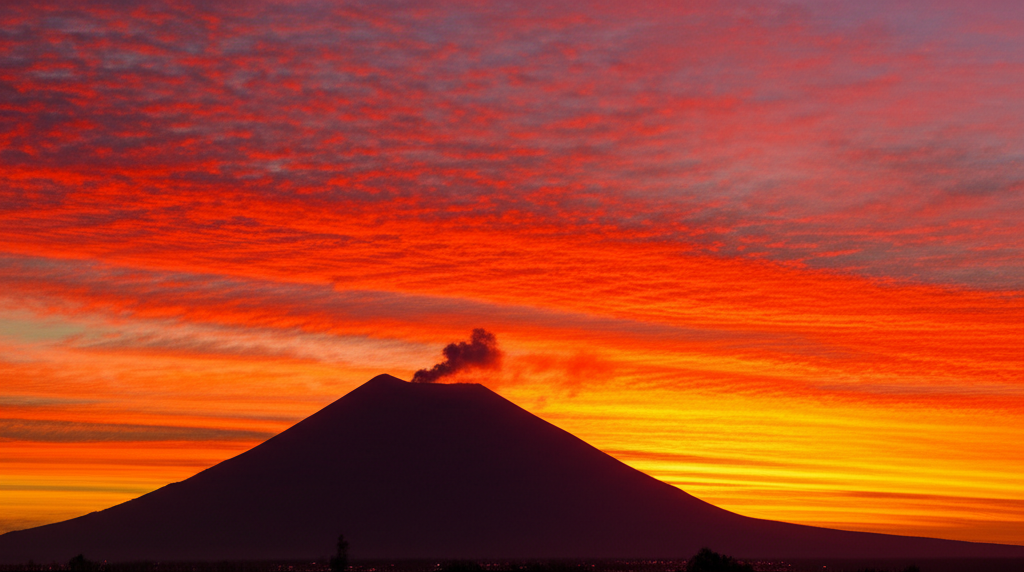
This global veil of particles dramatically affected the scattering of sunlight. As the sun approached the horizon, its light traveled through a greater length of the aerosol-laden atmosphere. The fine particles were exceptionally efficient at scattering away blue and green wavelengths, allowing the longer, redder wavelengths to dominate the observer’s view. Consequently, for more than two years following the eruption, populations from London to New York witnessed sunsets and sunrises of extraordinary, fiery intensity. These spectacles were so vivid they were documented not only in scientific journals but also in the works of artists, immortalizing the atmospheric legacy of a distant volcanic eruption.