
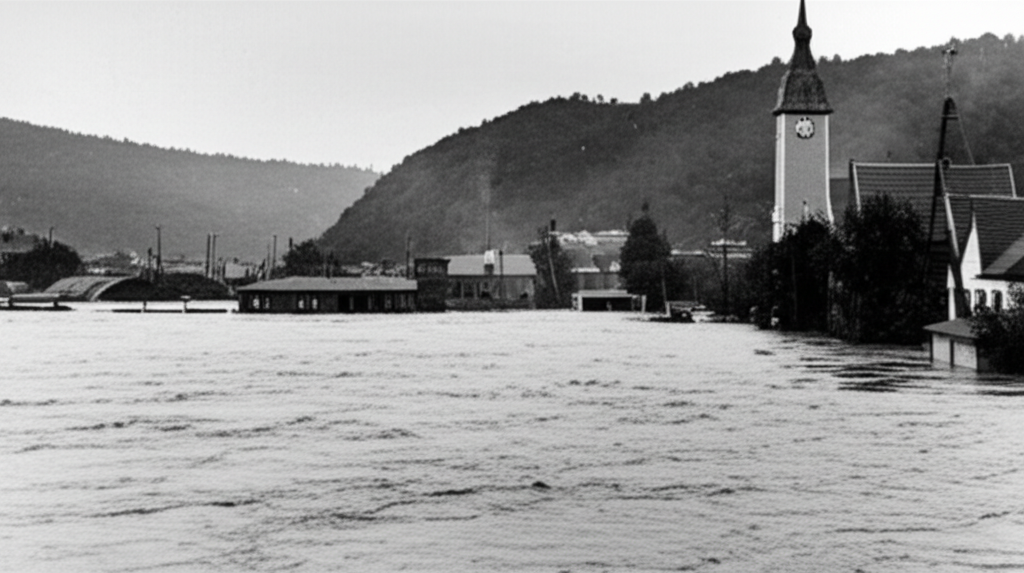
The catastrophic failure of the South Fork Dam on May 31, 1889, stands as a grim testament to the consequences of engineering negligence. While heavy rainfall acted as the catalyst, the true architects of the disaster were arguably the wealthy patrons of the South Fork Fishing and Hunting Club, who prioritized recreational convenience over structural integrity. Modifications to the dam, including the removal of essential discharge pipes and the installation of fish screens, critically hampered the spillway’s capacity, sealing the fate of the Conemaugh Valley.
When the dam finally gave way, a wall of water descended upon Johnstown with terrifying speed. The ensuing destruction was not merely hydrological but mechanical; the floodwaters accumulated barbed wire, houses, and locomotives, forming a grinding mass that pulverized the town. The tragedy was compounded when this debris pile ignited at the Stone Bridge, trapping survivors in a horrific convergence of fire and water.
Beyond the immediate loss of over 2,200 lives, the flood forced a significant shift in national approaches to disaster management and legal accountability.
It marked the first major peacetime mobilization of the American Red Cross under Clara Barton, establishing essential protocols for organized relief that persist today.
Legally, although the club members initially escaped financial ruin under the defense of an “act of God,” public outrage eventually influenced the development of strict liability laws, altering how courts viewed negligence in industrial accidents.
Ultimately, the devastation served as a historical turning point, signaling the end of an era where private enterprise could unchecked imperil public safety.

