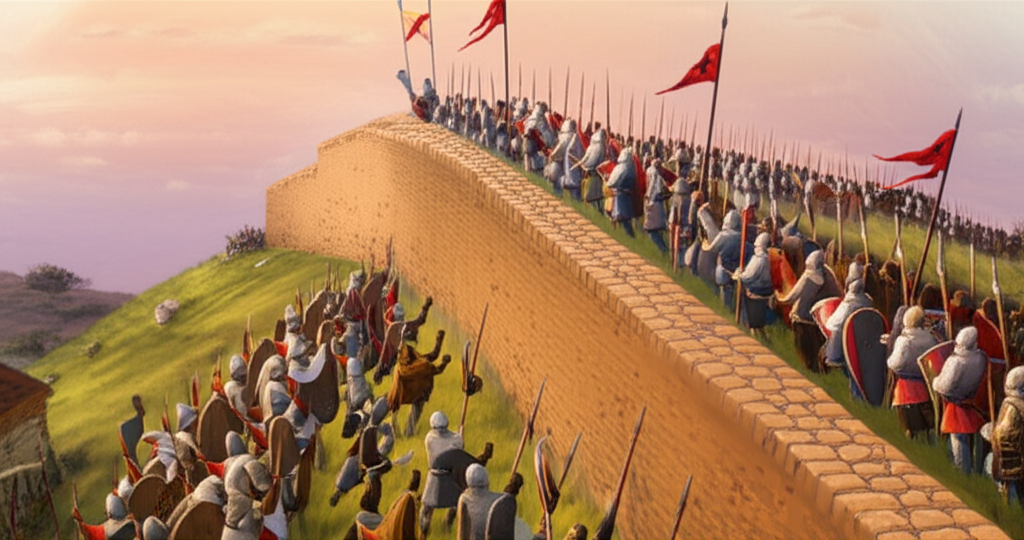
In the summer of 1420, the Holy Roman Emperor, Sigismund of Luxembourg, descended upon Prague with a vast coalition of feudal forces. Endorsed by the Papacy, this First Anti-Hussite Crusade sought to extinguish the growing religious reform movement in Bohemia. Sigismund’s strategy relied upon a total blockade of the capital, intending to starve the defenders into submission before claiming the Bohemian crown. However, the imperial forces underestimated the tactical acumen of the Hussite commander, Jan Žižka.
Recognizing that the city’s survival depended on maintaining supply lines, Žižka hastily fortified Vitkov Hill, a strategic ridge overlooking the vital roads to the east. The defense was not merely a feat of courage but a triumph of military engineering. Utilizing the nascent Wagenburg tactic, Hussite forces constructed temporary timber fortifications and utilized the steep terrain to neutralize the numerical superiority of the Crusader cavalry.
On July 14, the Imperial knights launched an assault intended to sweep the hill and complete the encirclement. The narrow ridge funneled the heavy cavalry into a choke point, stripping them of their maneuvering advantage and shock value. The Hussite peasantry, equipped with flails and primitive firearms, repelled the elite knights with disciplined ferocity.
The Crusaders’ failure to secure this position proved catastrophic for Sigismund’s campaign. Following a sudden counter-attack led by Žižka, panic spread through the Imperial ranks, forcing a humiliating retreat. The victory at Vitkov Hill did more than save Prague; it signaled the obsolescence of traditional feudal warfare when pitted against organized, defensive infantry effectively adapting to the landscape.