The Goryeo Dynasty, established by King Taejo in the early 10th century, distinguished itself through a sophisticated synthesis of statecraft and spiritual devotion. Unlike preceding eras, the Goryeo administration successfully unified the peninsula, utilizing Buddhism not merely as a religion, but as a central pillar of national identity and diplomatic strategy. This state-sponsored devotion faced its ultimate test during the catastrophic invasions by the Mongol Empire in the 13th century.
Following the destruction of the initial woodblocks by Mongol forces in 1232, the royal court retreated to Ganghwa Island. Here, they initiated a monumental logistical undertaking: the recreation of the Tripitaka Koreana. This project was driven by the strategic belief that spiritual unity could summon divine intervention to repel the invaders. The effort required the mobilization of national resources on an unprecedented scale, transforming religious fervor into a disciplined industrial operation.
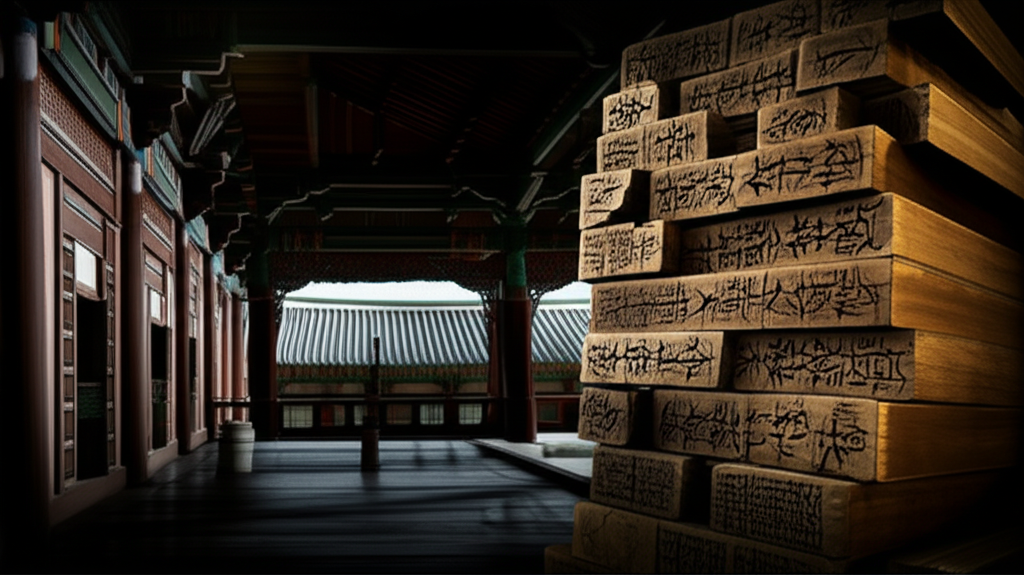
The technical optimization employed in this endeavor remains a subject of historical reverence. Artisans utilized silver magnolia wood, treated with brine and finished with lacquer to prevent decay and insect damage. The preservation strategy extended to the storage facilities; the Janggyeong Panjeon at Haeinsa Temple was engineered with precise ventilation systems to control humidity naturally.
The blocks were carved with uniform calligraphy, demonstrating centralized quality control.
The wood treatment process took years before carving began, prioritizing longevity over speed.
Consequently, the survival of these eighty thousand woodblocks serves as a testament to Goryeo’s advanced understanding of archival preservation and their resilience in the face of existential threat.