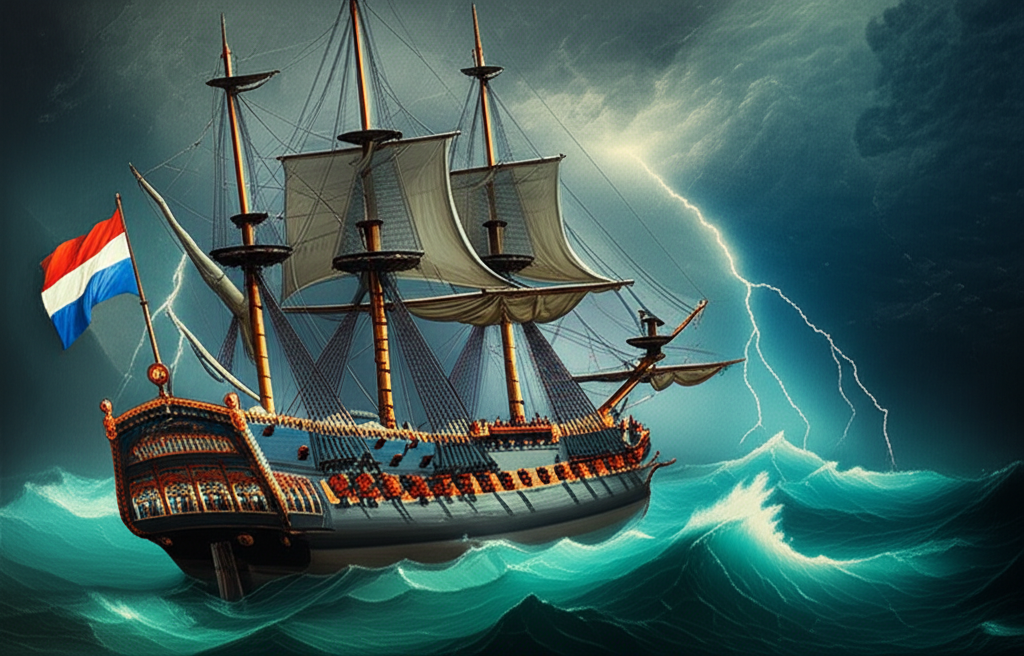
Chartered in 1621 by the States-General of the Netherlands, the Dutch West India Company (Geoctrooieerde Westindische Compagnie, or GWC) was conceived as an instrument of both commercial enterprise and state-sanctioned warfare. Its charter granted a trade monopoly over the Atlantic world, encompassing territories in West Africa and the Americas, with the explicit goal of challenging Iberian dominance.
Unlike its more commercially focused eastern counterpart, the GWC’s initial strategy was heavily militaristic. Its most profitable early ventures involved systematic privateering against Spanish and Portuguese interests. The capture of the Spanish silver fleet by Admiral Piet Hein in 1628 was a monumental success, providing a financial windfall that funded further colonial and military campaigns. This focus on naval conflict was a primary driver of the company’s policy, making it a quasi-military arm of the Dutch Republic in its war against Spain.
Simultaneously, the company pursued colonization and trade. It established the colony of New Netherland, with its capital at New Amsterdam, and temporarily seized Portuguese territories in Brazil and West Africa. These outposts were intended to serve as strategic naval bases and hubs for trade in commodities such as sugar, furs, and tobacco. The GWC also became a principal participant in the transatlantic slave trade, a grim but economically vital component of its operations.
Ultimately, the immense cost of maintaining a fleet, administering distant colonies, and waging constant war proved unsustainable. Competition from other European powers and the eventual loss of its Brazilian holdings led to the company’s financial collapse and reorganization in 1675. While the second GWC continued, it never regained the power or influence of its predecessor.