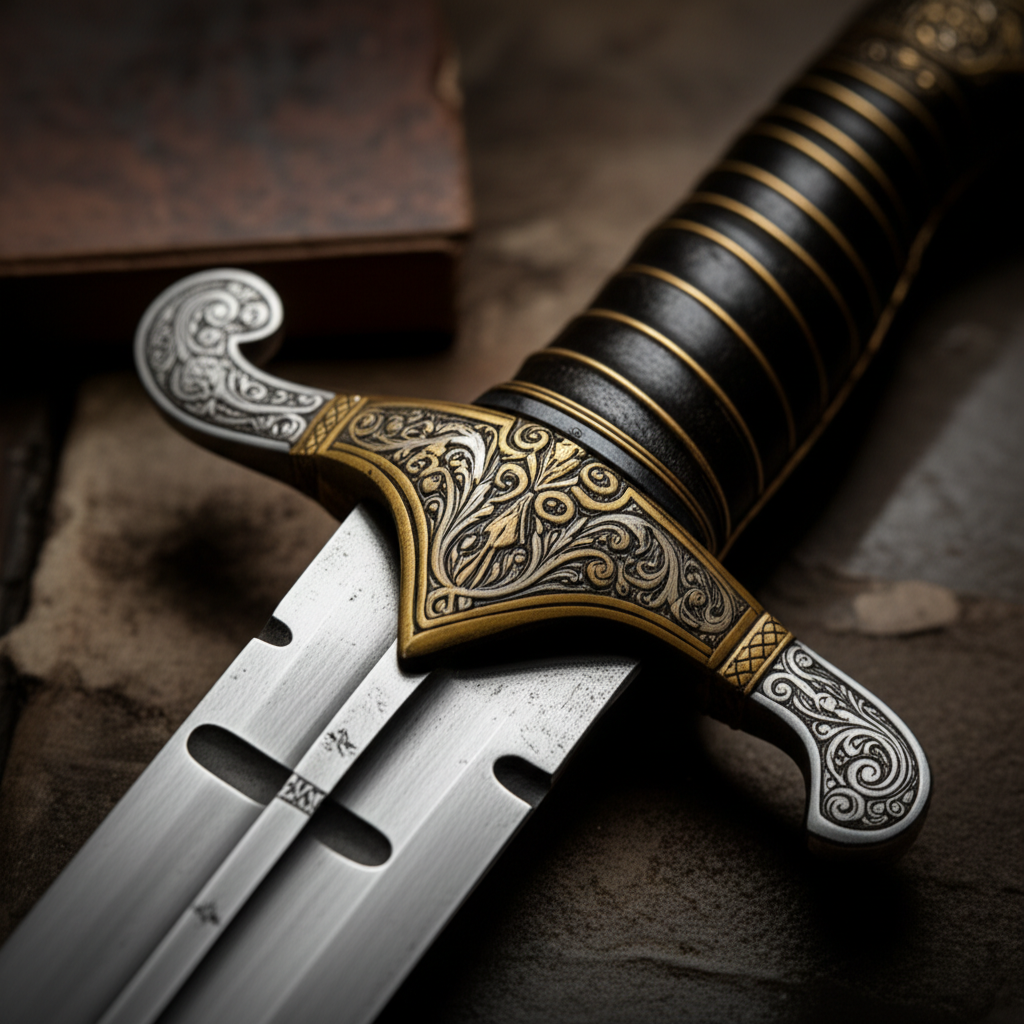
The art of Damascene inlay emerged as a distinct metallurgical discipline, transcending mere ornamentation to serve as a testament to the artisan’s absolute command over contrasting materials. Originating in the ancient workshops of the Near East before flourishing in centers like Toledo and Kyoto, this technique required a rigorous optimization of the steel substrate. Smiths utilized a precise strategy of cross-hatching the harder base metal to create a mechanical lock for softer materials—typically gold or silver. This ensured that the embellishment remained intact despite the shock and vibration inherent in martial usage.
Beyond structural integration, the application of precious metal overlay functioned as a crucial strategic identifier on the battlefield. Commanders utilized these intricate arabesques and calligraphic inscriptions to project authority and imply divine favor. The sharp visual contrast provided by the bright inlay against dark, oxidized steel offered immediate recognition of rank, a vital tactical consideration during the chaos of engagement. This visual language evolved into a sophisticated hierarchy, where specific motifs denoted lineage and verified military achievement without the need for spoken word.
The preservation of these artifacts reveals the mastery inherent in the cold-hammering process. Unlike heat-based fusion, which risked altering the temper of a blade, the cold application maintained the weapon’s functional integrity while exponentially enhancing its value. This dual focus on lethal efficiency and artistic grandeur cemented the legacy of damascening as the pinnacle of martial craftsmanship, bridging the divide between utilitarian tools and imperial regalia.