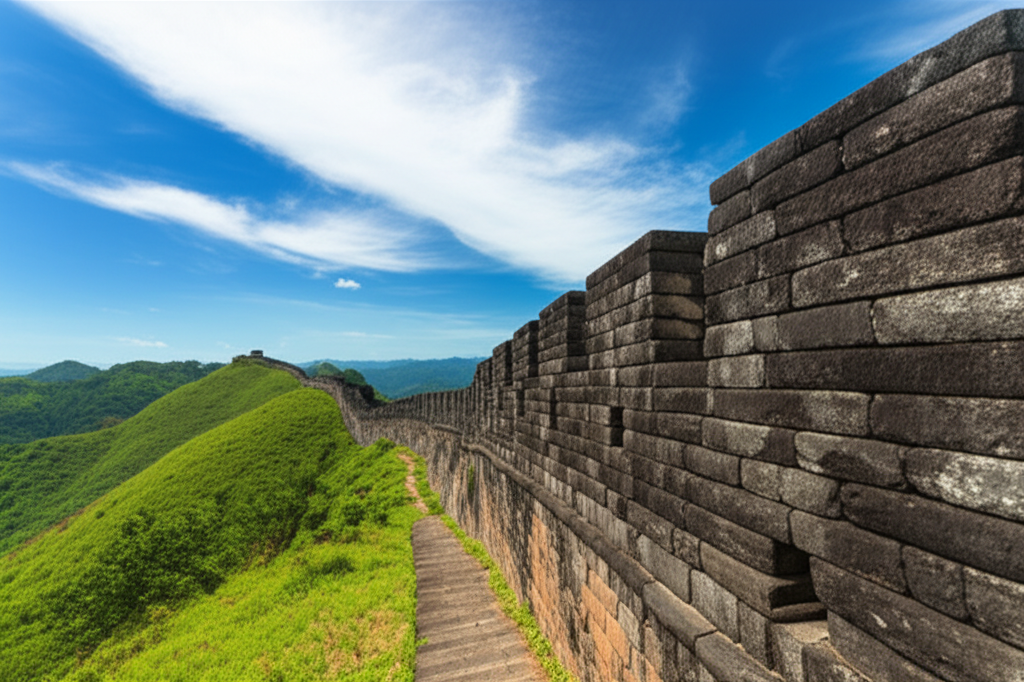
The construction of the Long Wall of Quang Ngai, historically designated as the Truong Luy, marked a significant strategic endeavor in the annals of Vietnamese engineering. Commissioned principally during the Nguyen Dynasty, with major consolidation efforts directed by the mandarin Le Van Duyet in 1819, this fortification served as a sophisticated instrument of administrative control rather than a simple defensive perimeter. Stretching over 127 kilometers from Quang Ngai to Binh Dinh, the structure delineated the geopolitical boundary between the lowland agrarian society and the highland tribes, specifically the Hre people.
Unlike purely military citadels constructed of hewn stone, the builders utilized a pragmatic blend of earth and stone, optimizing local resources for rapid yet durable erection. The strategic alignment followed the rugged topography of the Truong Son Mountains, incorporating natural barriers to enhance structural efficacy. This architectural decision suggested a focus on regulating trade and enforcing taxation rather than solely repelling invasion. By channeling movement through designated gates, imperial authorities effectively monopolized the lucrative commerce of cinnamon and salt, commodities that were vital to the regional economy.
Historical analysis indicates that the wall functioned as a regulated interface rather than an absolute blockade. It facilitated a complex relationship of interdependence and friction between the plains and the mountains. Ultimately, the Truong Luy stands as a testament to the Nguyen Dynasty’s ambitious efforts to consolidate power and manage the diverse ethnic landscape of Central Vietnam through monumental infrastructure.