
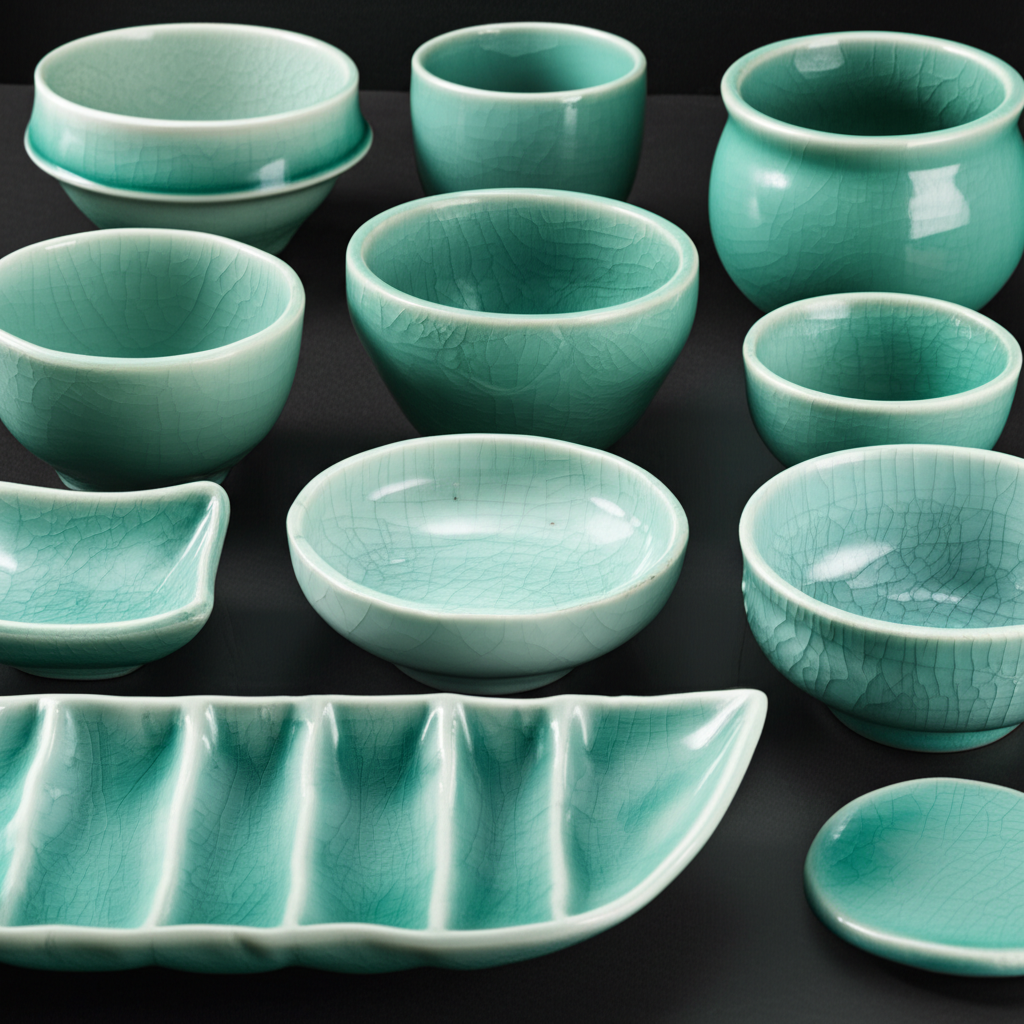
The celadon wares of the Goryeo Dynasty (918–1392) represent a zenith in ceramic artistry, distinguished not merely by their form but by the sophisticated techniques developed to perfect their appearance. Goryeo potters achieved their signature ethereal, jade-green glaze through meticulous control of kiln conditions. By mastering a reduction firing atmosphere—carefully limiting oxygen during the firing process—they could manipulate the iron oxides within the glaze to produce the coveted bluish-green hue. This level of atmospheric control was a significant technological advancement, allowing for a consistency and depth of color that surpassed earlier ceramic traditions.
The most defining innovation, however, was the development of the sanggam inlay technique. Departing from simple incising or painting, artisans would carve designs into the semi-dry clay body and then fill the recesses with contrasting white or black slip. After scraping the surface smooth, the piece was glazed and fired. This intricate process created designs of remarkable clarity and permanence, embedding motifs of cranes, clouds, and willows directly into the vessel. The combination of the perfected glaze and the refined inlay transformed Goryeo celadon from a functional object into a canvas for complex artistic expression, reflecting the refined tastes and technological prowess of the era.


