
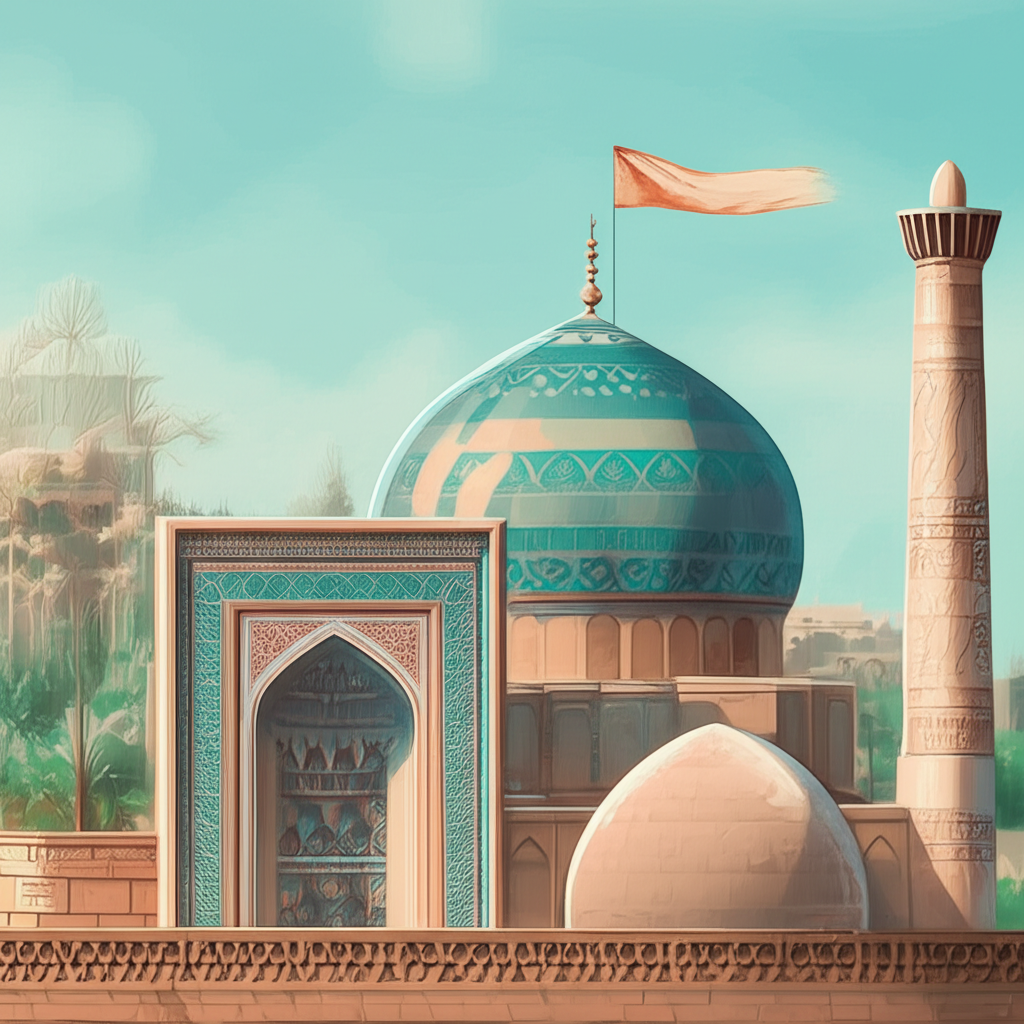
The emergence of the Ghaznavid Empire from the remnants of Samanid authority in the late tenth century represented a profound transformation in the political landscape of Central Asia. Founded by Turkic military leaders, the dynasty’s power was consolidated under Mahmud of Ghazni, whose reign epitomized a new model of statecraft. The strategic foundation of Ghaznavid supremacy was its professional army, composed primarily of elite Turkic ghulams (slave soldiers) whose unwavering loyalty was directed personally to the sultan, bypassing traditional tribal allegiances.
This disciplined military instrument allowed Mahmud to pursue an ambitious and highly effective dual-front policy. To the west, he systematically dismantled rival powers in Khorasan and Persia, expanding his domains and securing critical trade routes. Simultaneously, his legendary campaigns into Northern India served a crucial strategic purpose beyond mere conquest. The vast wealth plundered from Indian temple cities was not simply hoarded but reinvested to fund the state, pay the army, and finance grand architectural projects, thereby reinforcing the sultan’s power and prestige.
While exercising absolute sovereignty, the Ghaznavids shrewdly sought and received formal recognition from the Abbasid Caliphate, cloaking their military authority in the mantle of Islamic legitimacy. This synthesis of Turkic martial prowess, Persian administrative tradition, and Sunni orthodoxy created a powerful political template. The empire’s legacy was not just in its conquests, but in cementing the Turco-Persian model of rule that would dominate the region for centuries, long after the Ghaznavids themselves were supplanted by the Seljuks.

