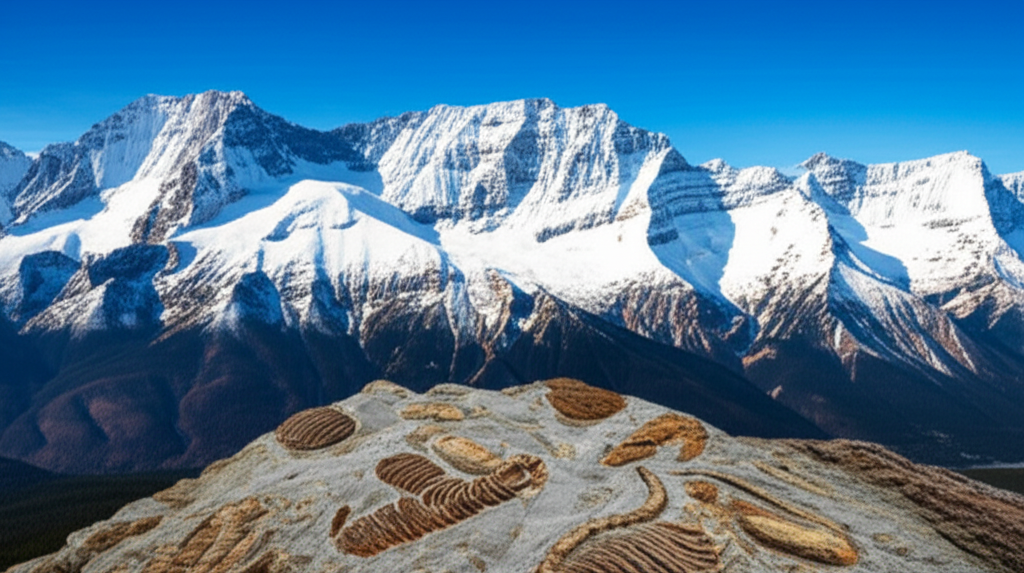
In the late summer of 1909, the trajectory of paleontology was irrevocably altered on the high slopes of the Canadian Rockies. Charles Doolittle Walcott, a seasoned administrator of the Smithsonian Institution, chanced upon a loose fragment of rock that would eventually challenge established narratives regarding the history of life. While traversing a trail in what is now Yoho National Park, Walcott identified fossils of extraordinary detail, preserving not merely the hard shells typical of the era, but the delicate soft tissues of ancient organisms.
This discovery, which came to be known as the Burgess Shale, provided a definitive window into the Cambrian Explosion, a period roughly 508 million years ago marked by a rapid diversification of complex life forms. Prior to this event, the fossil record was fragmented and heavily biased toward organisms with mineralized skeletons. Walcott’s subsequent excavations revealed a marine ecosystem of bewildering variety, populated by creatures possessing anatomical structures that defied immediate classification.
The significance of the site extended far beyond simple categorization. The preservation quality allowed for a detailed reconstruction of ecological interactions, suggesting that early life was not primitive or simple, but engaged in complex predator-prey dynamics. These specimens demonstrated that the fundamental body plans of modern animals were established with surprising speed. The Burgess Shale remains a paramount reference point for historians of science, documenting a critical epoch where the diversity of life on Earth first flourished in earnest.