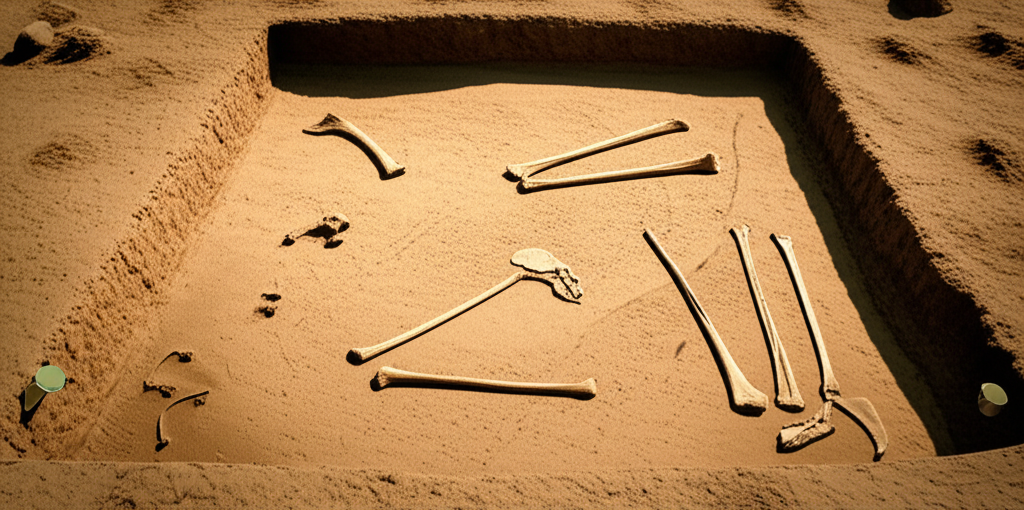
In February 1974, a pivotal shift in the eroding sands of the Willandra Lakes region revealed one of the most significant archaeological finds of the twentieth century. Geologist Jim Bowler, revisiting the site where earlier cremation remains had been located, identified the exposed cranium of what would become known to science as Mungo Man (LM3). This discovery did not merely add a data point to the archaeological record; it fundamentally altered the understanding of human occupation in the Australian continent during the Pleistocene era.
The excavation unveiled a sophisticated Ritual burial unlike any previously documented in such antiquity. The remains were found coated in Red ochre, a mineral pigment transported from a specific quarry many kilometers away. This deliberate application suggested a complex ceremonial practice, indicating that the society to which Mungo Man belonged possessed rich spiritual traditions and social structures. The presence of such rites challenged the prevailing narratives of the time, which often underestimated the cultural complexity of early human populations in the region.
Subsequent analysis and Radiocarbon dating placed the burial at approximately 40,000 to 42,000 years ago. This evidence provided undeniable proof that Aboriginal people had inhabited the continent far longer than European scholarship had previously conceded. The findings at Lake Mungo forced a recalibration of the global timeline regarding human migration out of Africa, demonstrating that maritime capabilities and adaptation to arid environments were achieved much earlier than once theorized.