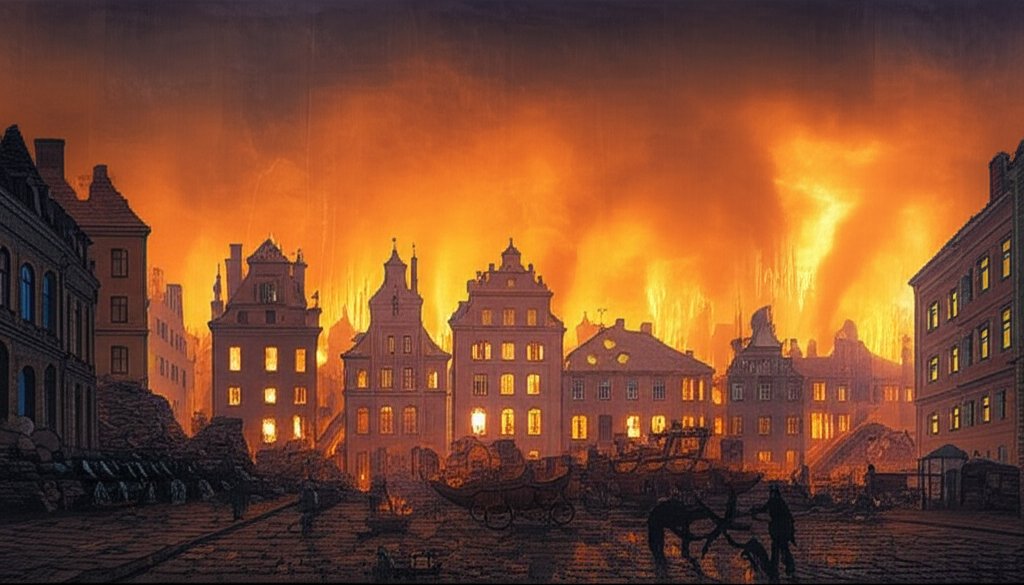
The conflagration known as the Great Fire of Turku, which consumed the city in September 1827, served as a defining rupture in Finnish cultural history. While the immediate aftermath necessitated the physical reconstruction of the realm’s oldest city, the event functioned primarily as a catalyst for a profound geopolitical and intellectual realignment. The destruction of the Imperial Academy of Turku and the incineration of its vast library severed the final tangible links to the Swedish era, effectively rendering the city a tabula rasa for the Russian administration to mold.
Governor-General Arseni Zakrevsky utilized the devastation to implement a rigorous urban strategy. The chaos of medieval alleyways was replaced by the ordered rationalism of the Empire style grid plan, designed by the architect Carl Ludvig Engel. This architectural shift was not merely aesthetic but represented the imposition of bureaucratic order and fire safety optimization upon the landscape. The broad avenues were engineered to prevent the spread of future infernos, reflecting a modern approach to civic planning that prioritized control and durability over organic medieval growth.
Furthermore, the subsequent transfer of the university to Helsinki signaled the ultimate migration of the nation’s cultural gravity. Turku, once the undisputed ecclesiastical and academic center, was relegated to provincial status, while the new capital absorbed the intelligentsia and the administrative core. Thus, the fire expedited the strategic transition begun in 1812, solidifying the Russian Empire’s consolidation of power within the Grand Duchy and permanently altering the cultural hierarchy of Finland.