
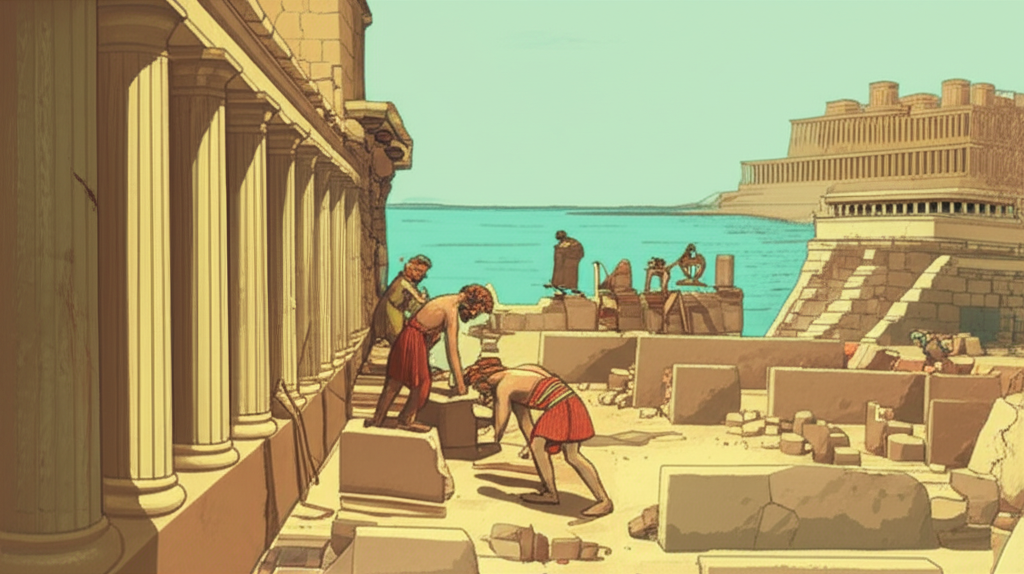
The submerged settlement of Pavlopetri, situated off the coast of southern Laconia, represented a pivotal evolution in early Aegean urban planning. Dating back to the Final Neolithic period, the city’s construction revealed a sophisticated understanding of spatial organization that predated the great palaces of the Mycenaean era. Rather than a haphazard collection of dwellings, the site featured a clearly defined network of streets and water management systems, suggesting a centralized approach to civic development.
Builders utilized locally sourced uncut stone to establish robust foundations, supporting superstructures composed of mudbrick and timber. This architectural strategy provided necessary stability against the region’s seismic activity. The distinct use of semi-detached housing maximized the available land area, creating a dense yet orderly urban fabric. These structures were not merely residential; they incorporated courtyards for ventilation and light, demonstrating an acute awareness of environmental optimization within the domestic sphere.
Furthermore, the integration of distinct zones for industry and storage within the residential footprint highlighted the city’s economic strategic intent. The discovery of numerous pithoi embedded in the floors indicated a systematic approach to resource preservation, essential for a trading hub. Through this methodical construction, Pavlopetri functioned as a fortified interface for maritime commerce, showcasing a level of societal complexity that persisted until tectonic shifts eventually reclaimed the land.


