The construction of Borobudur Temple, a monumental undertaking during the zenith of the Sailendra dynasty in the 8th and 9th centuries, stands as a testament to advanced architectural planning and logistical mastery. The project’s success hinged on a series of strategic decisions that optimized both labor and natural resources.
Rather than building on a flat plain, the designers ingeniously chose a natural hill as the core of the structure. This fundamental choice drastically reduced the volume of earthwork required and provided a stable, pre-existing foundation. Andesite stone, sourced from nearby riverbeds, was quarried, transported, and cut with remarkable precision. The blocks were then assembled using an advanced interlocking system of knobs and indentations, creating a mortarless structure resilient to the region’s seismic activity.
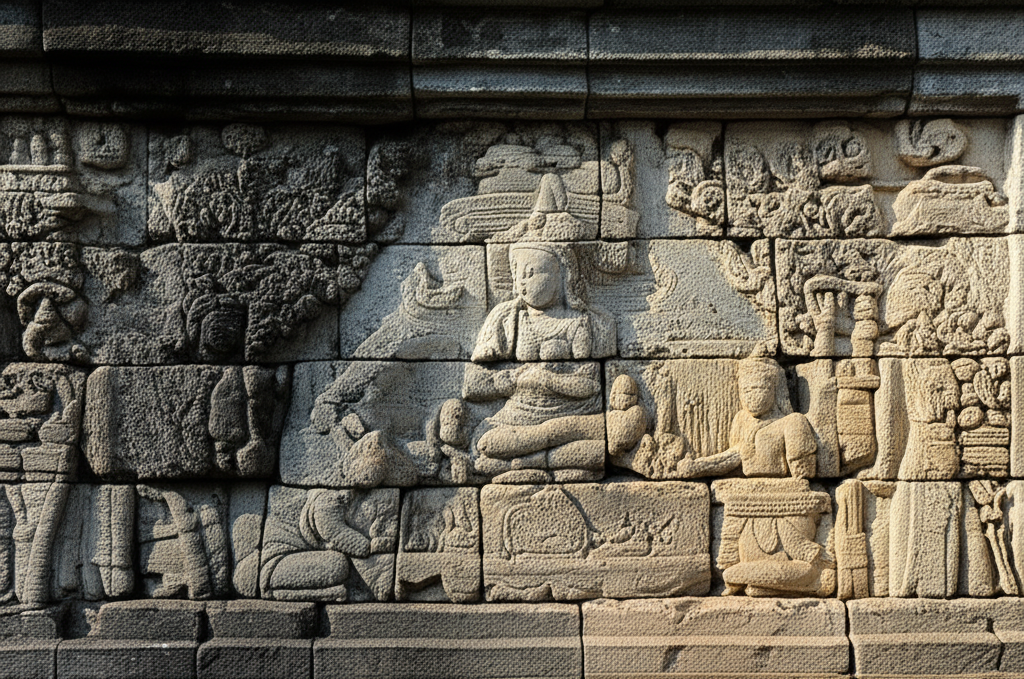
The temple’s construction was executed in distinct phases, allowing for the simultaneous carving of its extensive narrative reliefs as the upper terraces were being completed. This integrated approach suggests a highly organized workforce of specialized artisans and laborers operating under a unified master plan. The entire endeavor reflects not simply immense manpower, but a sophisticated understanding of engineering, project sequencing, and the seamless fusion of structural form with intricate iconographic design.