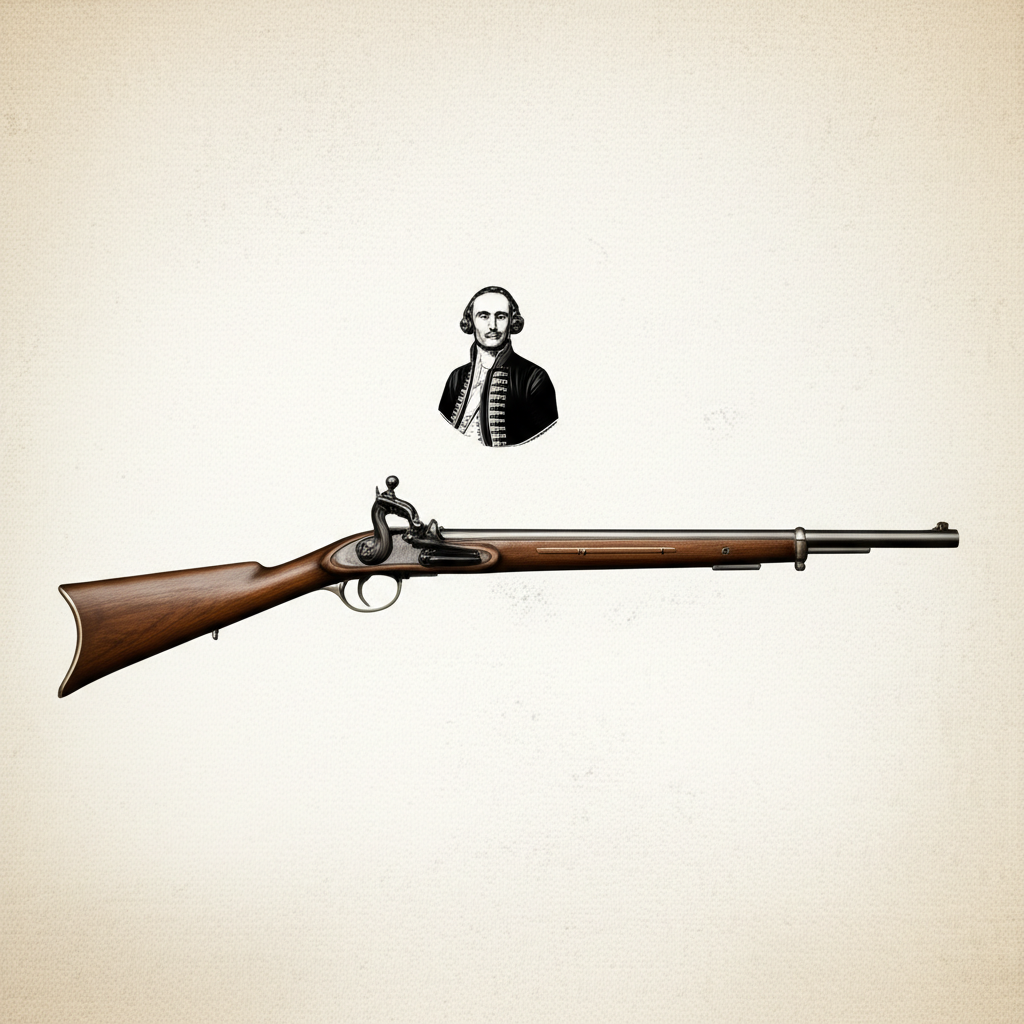
In the annals of martial engineering, few developments presented as stark a technological divergence as the Girandoni air rifle, developed by the Austrian horologist Bartolomeo Girandoni circa 1779. While contemporary forces relied heavily on the slow, obfuscating chaos of flintlock musketry, Girandoni devised a system that leveraged compressed air to deliver lethal force with unprecedented rapidity. This was not merely a novelty but a calculated attempt to optimize infantry firepower through pneumatic principles.
The weapon’s strategic value lay in its sophisticated capacity for volume fire. Utilizing a removable air reservoir which doubled as the buttstock, the rifle operated without the telltale flash and smoke of gunpowder. This afforded Austrian sharpshooters a distinct tactical edge: the ability to fire nearly silent volleys without revealing their position. Furthermore, the integration of a gravity-fed tubular magazine allowed a trained soldier to discharge twenty rounds in roughly thirty seconds, a rate of fire that drastically outpaced the standard three rounds per minute of a conventional musketeer.
Despite these mechanical triumphs, the operational deployment of the weapon revealed significant logistical challenges. The systems required fragile hand pumps and specialized maintenance that strained the supply lines of the era. The reservoir’s leather seals were prone to failure in temperature extremes, rendering the weapon useless in prolonged campaigns. Ultimately, while Girandoni’s invention demonstrated the theoretical superiority of repeating arms, the industrial limitations of the late eighteenth century prevented it from permanently displacing black powder weaponry.