
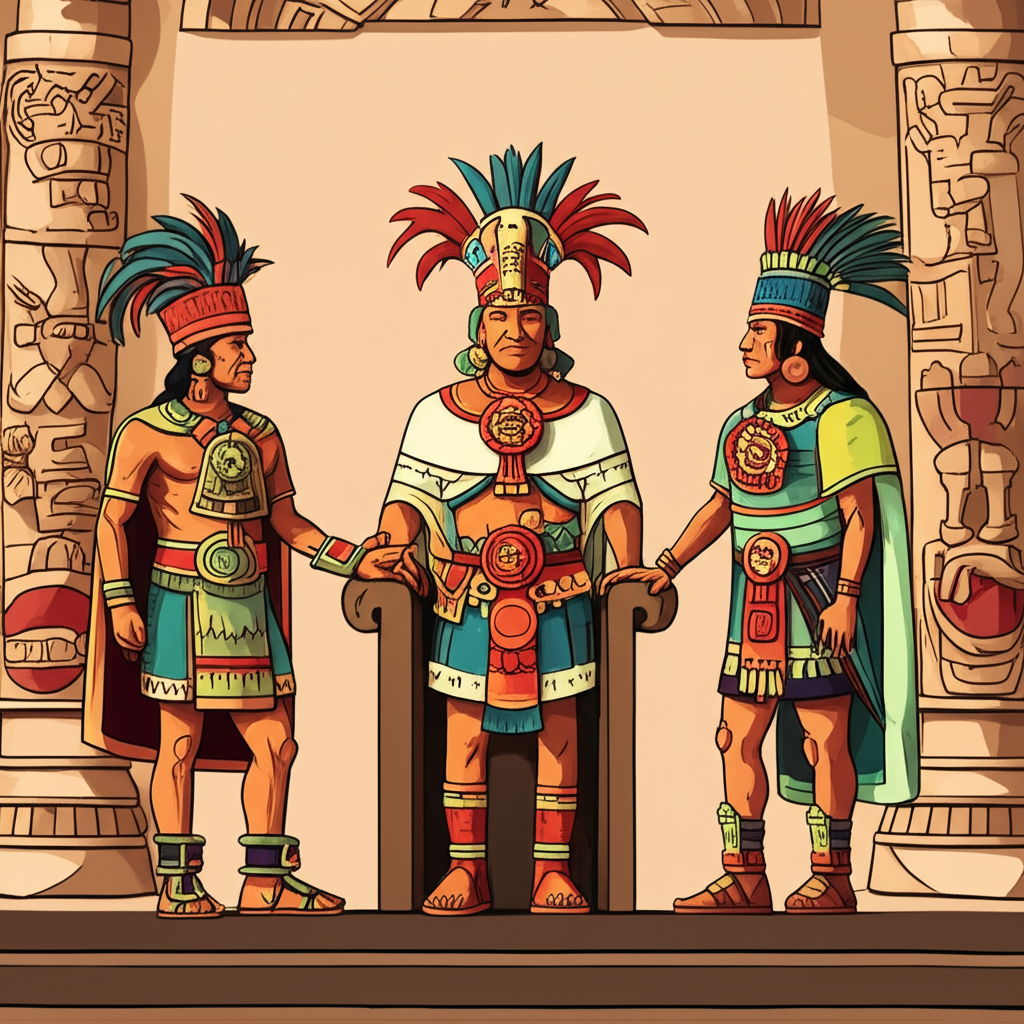
The Aztec Empire was not a centralized, monolithic state but a hegemonic structure governed by the Triple Alliance, a coalition of the city-states Tenochtitlan, Texcoco, and Tlacopan. Established in 1428, its primary mechanism of rule was not direct political administration but a sophisticated system of tribute extraction from conquered provinces.
Upon subjugating a territory, the Alliance typically left local leadership and cultural practices intact. The defeated altepetl, or city-state, was instead assessed a specific quota of goods, which was to be delivered periodically to the capital cities. These tribute payments were remarkably diverse, ranging from staple goods like maize and textiles to luxury items such as quetzal feathers, jade, and cacao. This strategic approach optimized the flow of wealth to the imperial core with minimal administrative overhead, avoiding the costs of full-scale occupation.
Compliance was maintained through the credible and consistent threat of military retribution. The formidable Aztec armies served as the ultimate enforcers, swiftly suppressing any province that failed to meet its obligations or attempted rebellion. This created a system of coerced loyalty rather than genuine political integration. Within the Alliance itself, a clear hierarchy existed; Tenochtitlan held military and political primacy, receiving the majority of the tribute, while Texcoco and Tlacopan assumed subordinate roles. This internal power dynamic was fundamental to the empire’s expansion and the consolidation of Mexica dominance.


