
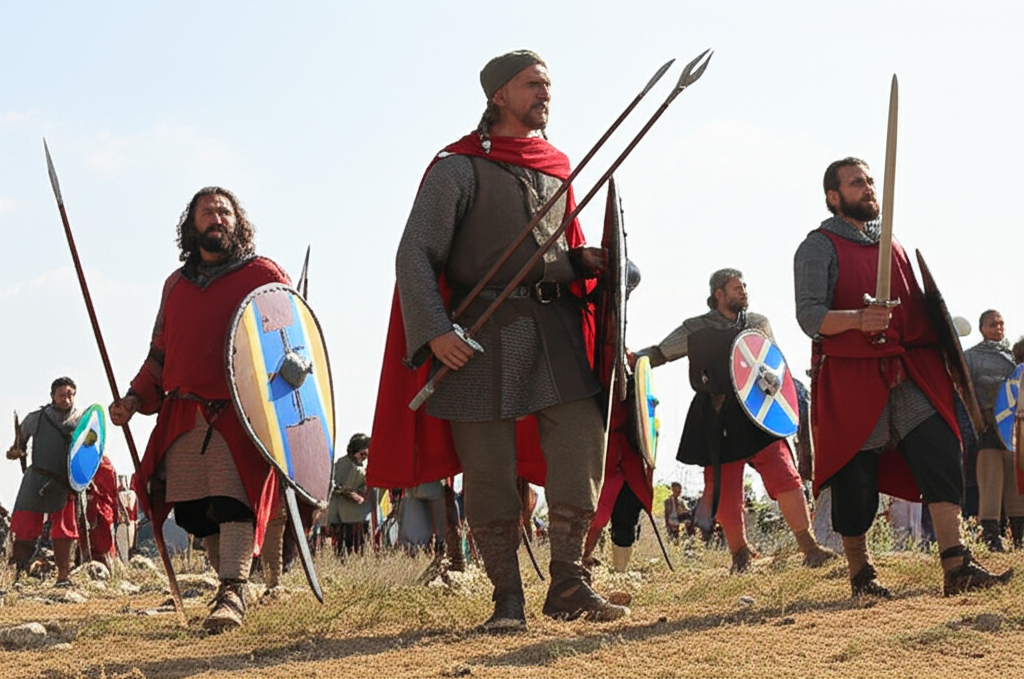
The military expansion of the Crown of Aragon during the late Middle Ages relied heavily on the Almogavers, a distinct class of light infantry that challenged the prevailing dogmas of feudal warfare. Unlike the heavily armored knights that dominated European battlefields, these frontier mercenaries prioritized mobility, endurance, and aggression. Their strategic utility lay in their ability to traverse rugged terrain inaccessible to heavy cavalry, allowing Aragonese commanders to project power across the Mediterranean with unprecedented speed and efficiency.
In tactical engagements, the Almogaver doctrine focused on neutralizing the advantages of mounted opponents through asymmetrical warfare. Armed with a heavy throwing spear known as the azcona and a long, heavy knife called the coltell, they employed shock tactics that devastated static formations. Their standard procedure involved hurling javelins to disrupt enemy lines before closing in for hand-to-hand combat. Crucially, they optimized their lethality by targeting the mounts of enemy knights; once a horse was disabled, the heavy armor of the falling rider transformed from a defensive asset into a fatal liability.
The operational peak of these troops occurred under the leadership of Roger de Flor within the Grand Catalan Company. During their campaigns in the Byzantine Empire and Greece, they demonstrated that disciplined light infantry could dismantle numerically superior feudal armies through superior maneuvering and psychological warfare. Their infamous battle cry, “Awake Iron,” preceded assaults that struck flint against steel, creating a terrifying auditory display. By stripping away the logistical burdens of heavy armor, the Almogavers maximized the ratio of mobility to force, securing Aragon’s hegemony over the Mediterranean basin for centuries.


