The Almogàvers emerged not merely as mercenaries, but as the decisive instrument of Aragonese expansionism during the thirteenth and fourteenth centuries. Originating from the harsh frontier lands of the Pyrenees, these light infantry units fundamentally altered the tactical calculus of medieval warfare, which had previously prioritized heavy cavalry. Their utility extended beyond mere skirmishing; they functioned as elite shock troops capable of breaking disciplined formations through sheer ferocity and superior mobility.
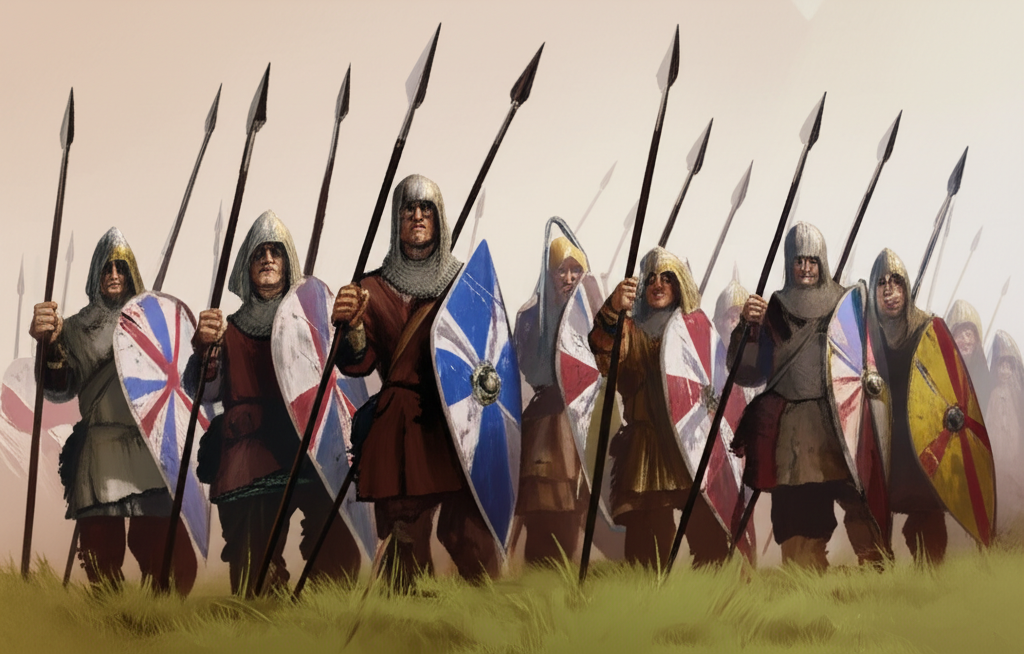
Unlike the armored knights of France or Byzantium, the Almogàver relied on speed and agility to dominate the battlefield. Clad in simple sheepskin and armed with a heavy cleaver known as the coltell, along with distinct javelins, they exploited rough terrain where mounted units faltered. Their primary strategy involved a rapid, overwhelming assault, famously heralded by striking flint against steel to produce sparks—a psychological tactic designed to demoralize the enemy before engagement. This method neutralized the defensive advantages of heavier opponents, allowing the infantry to hamstring horses and dismantle the fallen riders with ruthless efficiency.
Under the strategic direction of the Crown of Aragon, these troops became integral to securing Mediterranean dominance. Their effectiveness reached its zenith during the War of the Sicilian Vespers and the subsequent campaigns of the Catalan Grand Company in the East. Commanders leveraged the Almogàvers’ ability to operate autonomously behind enemy lines, where they disrupted supply chains and inflicted asymmetrical attrition upon larger armies. Ultimately, they demonstrated that disciplined light infantry, when properly deployed, could dictate the outcome of campaigns against technically superior feudal hosts.