In the annals of paleontological history, few chapters proved as transformative as the discovery of the Burgess Shale. Located within the Canadian Rockies, this geological repository provided the definitive record of the Cambrian Explosion, a rapid evolutionary epoch occurring approximately 508 million years ago. Before this revelation, the fossil record appeared curiously sparse, lacking the immediate transitional forms that early evolutionary theory had anticipated. The shale revealed a sudden proliferation of complex life, fundamentally altering the scientific understanding of biological development.
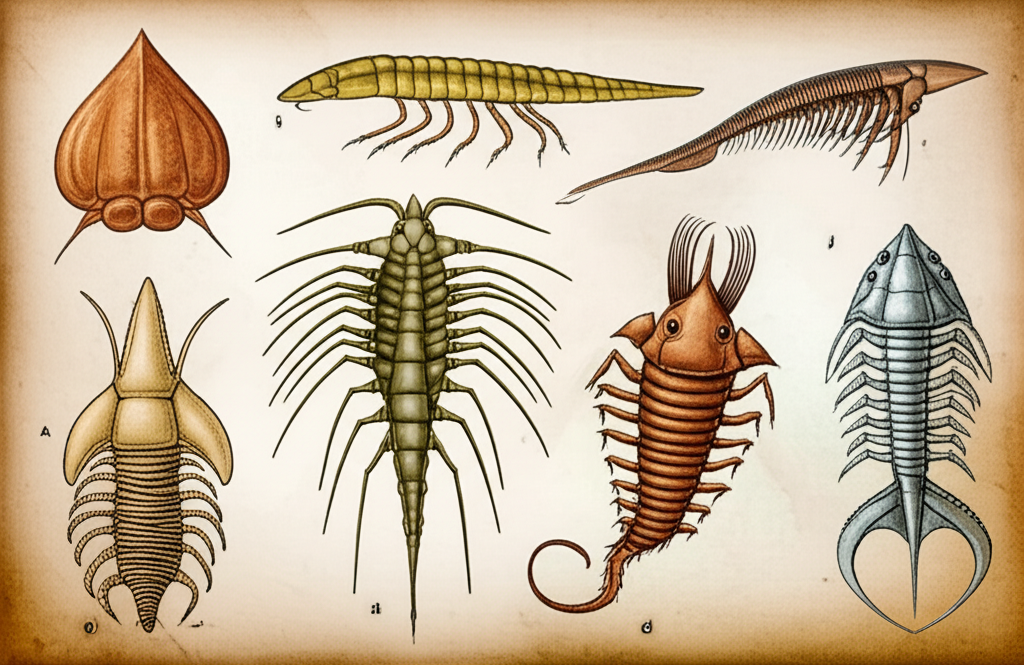
The true significance of the site lay in the exceptional quality of soft-bodied preservation. Unlike typical fossil beds that retained only mineralized shells or skeletal structures, the specific chemical and sedimentary conditions of the Burgess Shale captured delicate tissues, eyes, and internal organs in fine detail. This unique preservation allowed for the reconstruction of organisms with unprecedented accuracy, revealing a disparity of anatomical designs that established the primary body plans found in modern animal groups.
Excavation efforts, notably those led by Charles Doolittle Walcott in the early 20th century, unearthed a biota that defied simple classification. The fauna demonstrated that this period was not defined by slow gradualism, but by experimental morphology and ecological expansion. Evolutionary strategies during this era shifted decisively toward active predation and complex defense mechanisms, driving a biological arms race that accelerated the diversification of life on Earth.