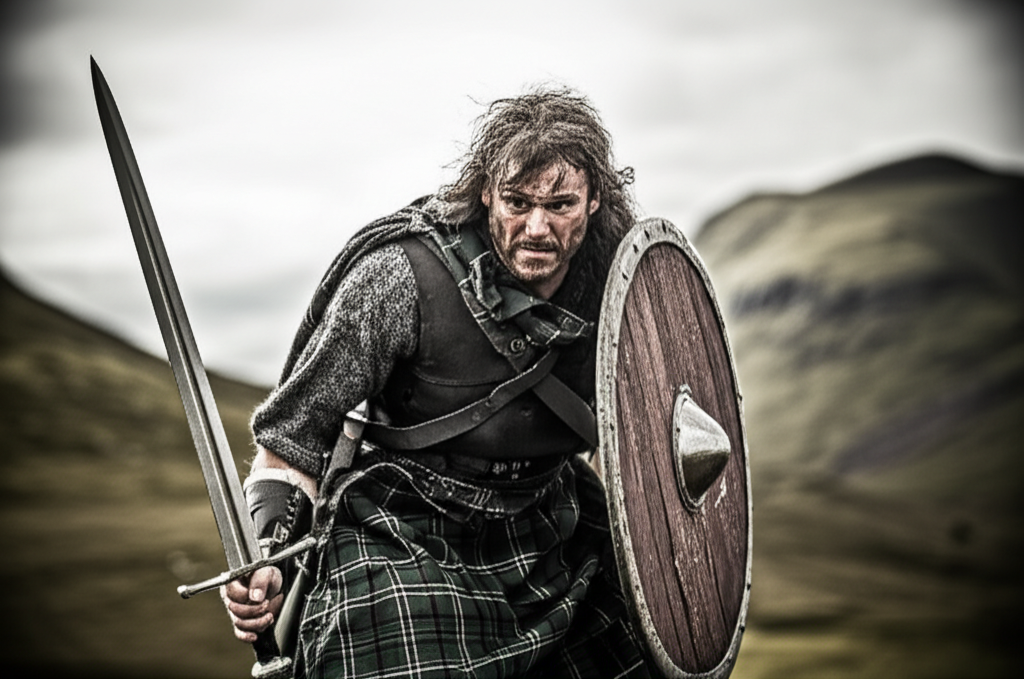
The utilization of the two-handed Claymore in Scottish military history represented a distinct tactical divergence from the shield-wall formations common elsewhere in Europe. Requiring immense physical fortitude, wielders of this great sword abandoned the protection of the targe—the traditional round shield—in favor of overwhelming offensive power. Strategists of the era noted that the weapon functioned not merely as a tool of slaughter, but as a specialized instrument designed to dismantle organized infantry lines.
In the heat of engagement, the primary objective of the Claymore swordsman was the disruption of the enemy’s defensive integrity. During the onset of the Highland Charge, these front-line warriors utilized the significant reach and mass of the blade to shear through pike shafts and shatter wooden shields. This aggressive maneuver created breaches in the opposing formation, allowing lightly armed clansmen to pour through the gaps with dirks and axes. The sheer momentum generated by the weapon often neutralized the reach advantage typically held by polearm units.
Furthermore, the weapon’s design incorporated a down-sloping cross-guard with quatrefoil terminations, which served a dual purpose. Beyond parrying, experienced combatants utilized the guard to trap opposing blades, effectively disarming adversaries in close quarters. While the era of the great sword eventually waned with the introduction of gunpowder and the basket-hilted broadsword, its tactical deployment remained a testament to a doctrine prioritizing shock, psychological dominance, and the rapid breaking of enemy lines.