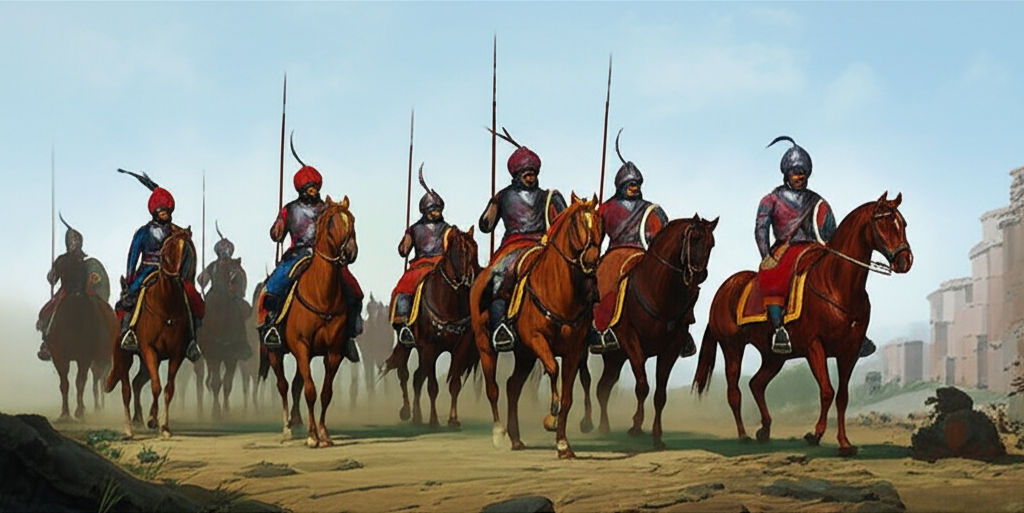
The emergence of the Stradioti during the late fifteenth century marked a significant evolution in European military doctrine. Recruited primarily from the Balkans—specifically Albania, Greece, and Dalmatia—these mercenaries provided the Venetian Republic with a necessary countermeasure to Ottoman expansion. Unlike the heavily armored men-at-arms that dominated Western Europe, the Stradioti emphasized extreme mobility and fluidity. Their operational value lay not in the shock action of the frontal charge, but in their capacity for reconnaissance, raiding, and the persistent harassment of enemy flanks, tactics that traditional heavy cavalry struggled to counter effectively.
On the battlefield, the Stradioti utilized asymmetric warfare strategies that disrupted the rigid formations of the Italian Wars. Armed with distinctively long hollow lances and curved swords, they eschewed heavy plate armor for agility, allowing them to execute rapid hit-and-run maneuvers. Their method of engagement often involved feigned retreats, a tactic designed to lure impetuous knights into ambushes or disorganized pursuits where heavy horses would fatigue. Furthermore, their psychological impact was profound; their ruthlessness and the practice of collecting enemy heads as trophies instilled terror in opposing ranks, serving as a potent instrument of demoralization against French and Italian forces.
The utility of these light horsemen eventually compelled other European powers, including France and England, to integrate similar units into their orders of battle. While the eventual standardization of military forces in subsequent centuries rendered their specific irregular style obsolete, the Stradioti demonstrated the critical importance of light cavalry support in combined-arms warfare. Their influence persisted in the development of later light cavalry units, such as hussars, permanently altering the tactical landscape of the Renaissance.