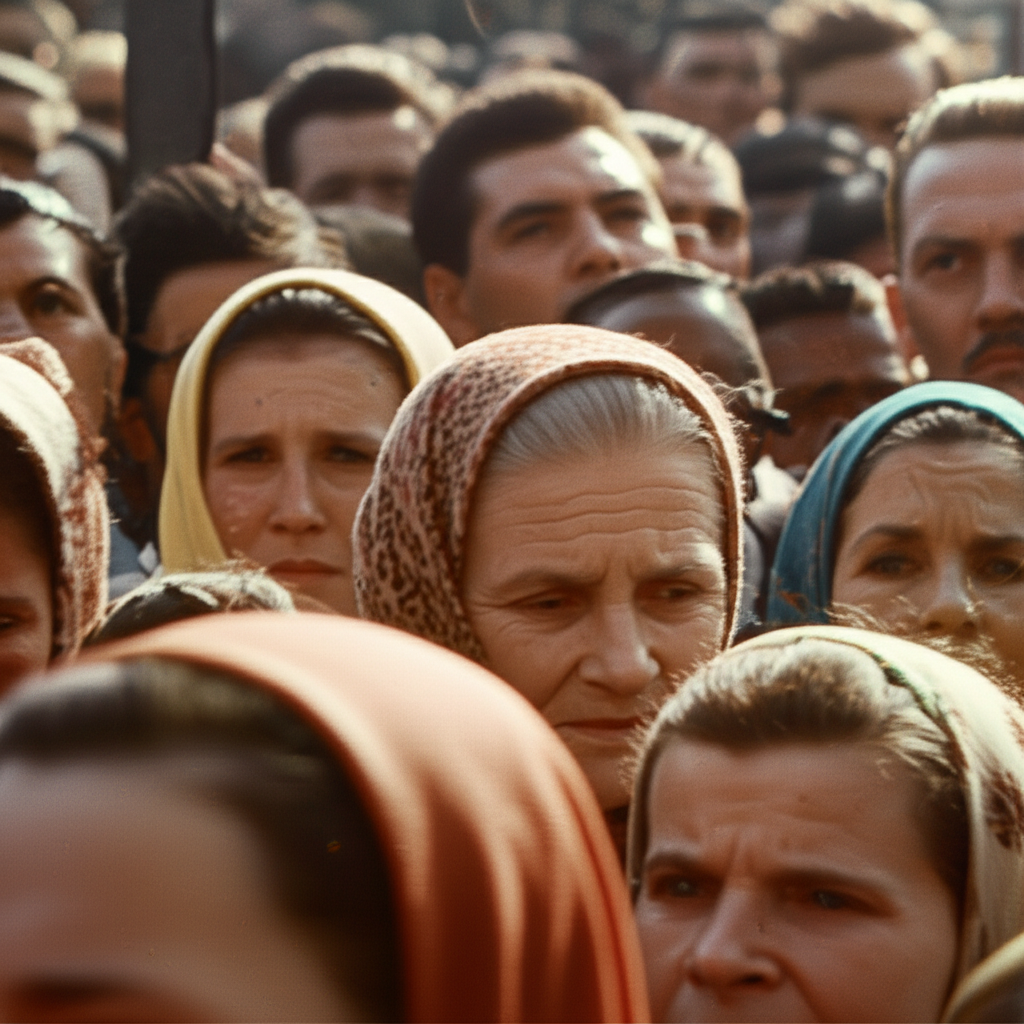
Amidst the chaotic aftermath of the assassination of President John F. Kennedy in Dealey Plaza, one figure remained conspicuously distinct. Identified by archivists as the Babushka Lady due to the headscarf she wore, this unknown witness occupied a tactically significant position on the south side of Elm Street. While the surrounding crowd recoiled in panic following the gunfire, photographic records—specifically the Zapruder film and the Bell footage—captured this woman standing firm, appearing to record the motorcade with a handheld camera. Her vantage point offered a direct line of sight to the Grassy Knoll, meaning her footage likely contained critical forensic data regarding the trajectory of the fatal shot.
Despite the Federal Bureau of Investigation issuing a public request for all photographic evidence, the Babushka Lady never presented herself to authorities during the Warren Commission’s tenure. This investigative failure resulted in the loss of what historians argue could have been the most definitive visual record of the event. The strategic value of her film lay in its potential to corroborate or refute the single-bullet theory, as she was filming from an angle opposite to Abraham Zapruder.
Decades later, a cabaret singer named Beverly Oliver claimed to be the mysterious observer. She asserted that federal agents had confiscated her film shortly after the tragedy, a narrative that aligned with various suppression theories. However, objective historical analysis cast significant doubt on her testimony. Oliver described using a Yashica Super-8 camera, a model that did not exist commercially in 1963. Furthermore, anthropometric comparisons between Oliver and the figure in the footage proved inconclusive. Consequently, the identity of the Babushka Lady remains an unresolved anomaly, representing a permanent blind spot in the archival documentation of the twentieth century’s most scrutinized crime.