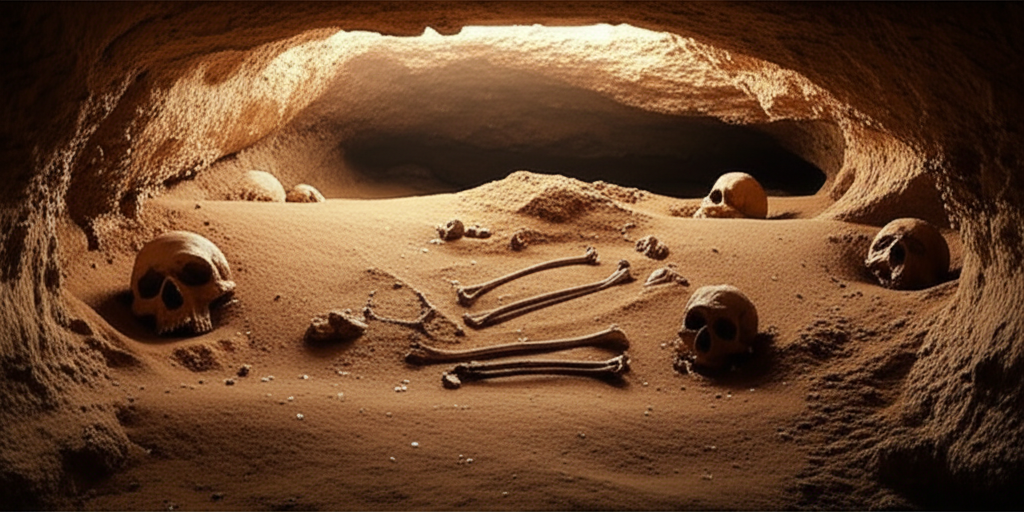
The discoveries within Shanidar Cave, nestled in the Zagros Mountains of Iraq, fundamentally altered the scholarly perception of Neanderthal cognitive and social capacities. The remains unearthed in the mid-20th century, particularly those designated Shanidar I and Shanidar IV, provided compelling, albeit debated, evidence of complex behaviors previously attributed solely to Homo sapiens. These findings shifted the focus from mere survival to the potential for social structure and symbolic thought among this archaic human species.
The most contentious of these finds was Shanidar IV, famously dubbed the “Flower Burial.” Initial analysis of soil samples surrounding the skeleton revealed clumps of ancient pollen from several species of brightly colored flowers. This led to the influential hypothesis that the individual had been intentionally laid to rest on a bed of flowers, suggesting a form of ritual. However, subsequent analysis introduced more pragmatic explanations. Scholars have since posited that the pollen clusters could have been introduced by burrowing rodents, which are known to store seeds and flowers in their nests, challenging the interpretation of deliberate funerary offerings.
Beyond the floral debate, the remains of Shanidar I, an older male with multiple debilitating injuries sustained long before death, suggested that his survival was only possible through sustained group assistance. This evidence for altruistic care, combined with the deliberate placement of other bodies within the cave, points toward a sophisticated social dynamic. While the precise nature of Neanderthal mortuary practices remains a subject of rigorous academic inquiry, the findings at Shanidar Cave irrefutably demonstrated that their world was far more complex than previously imagined.