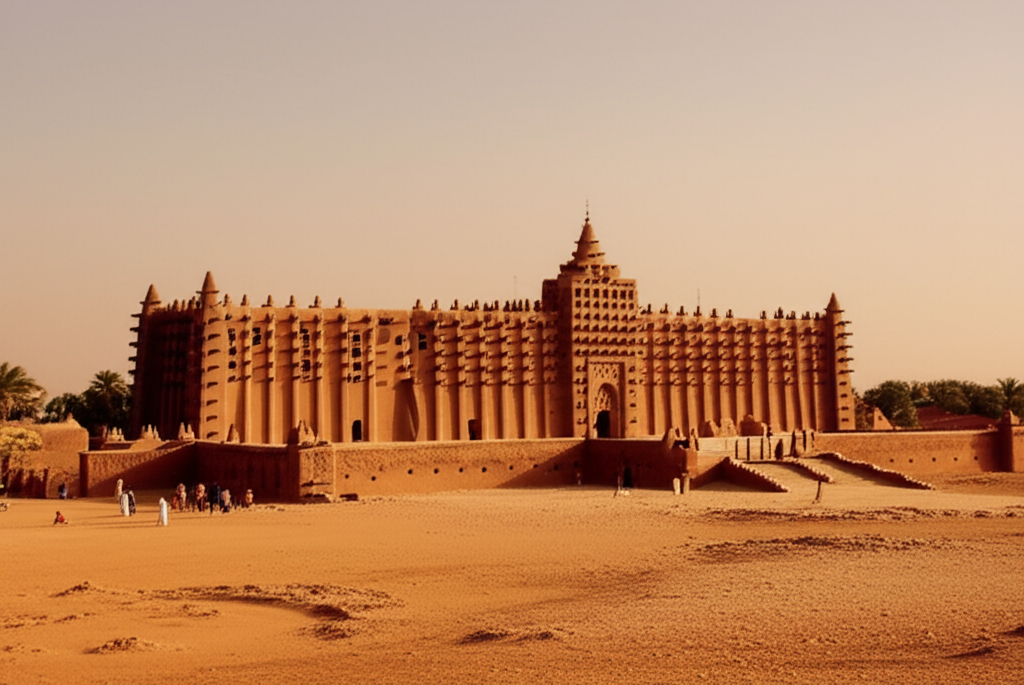
An Anatomy of Earthen Architecture: Form and Function in the Great Mosque of Djenné
The Great Mosque of Djenné transcends its status as a mere icon of Sudano-Sahelian architecture; it is a masterclass in the symbiotic relationship between form, material, and environment. Its monumental structure is not an arbitrary aesthetic choice but a highly optimized response to its climatic and social context. The mosque’s thick banco walls, composed of sun-dried earthen bricks, function as a significant thermal mass. This design passively regulates the interior temperature by absorbing heat during the day and radiating it slowly overnight, effectively mitigating extreme diurnal temperature swings without mechanical systems.
Further analysis reveals the strategic dual purpose of its most distinctive features: the toron, or bundled palm wood beams. Protruding from the facade, these are not merely decorative elements. Structurally, they reinforce the earthen walls against shear stress and provide critical load-bearing support. Functionally, they serve as permanent scaffolding, essential for the annual crépissage de la Grande Mosquée, the community festival where the entire structure is re-plastered.
This integration of structural necessity with communal ritual underscores the genius of its design. The mosque is not a static monument but a living architectural system, where the physical form dictates the cultural practices required for its preservation, ensuring its resilience and profound connection to the community it serves.