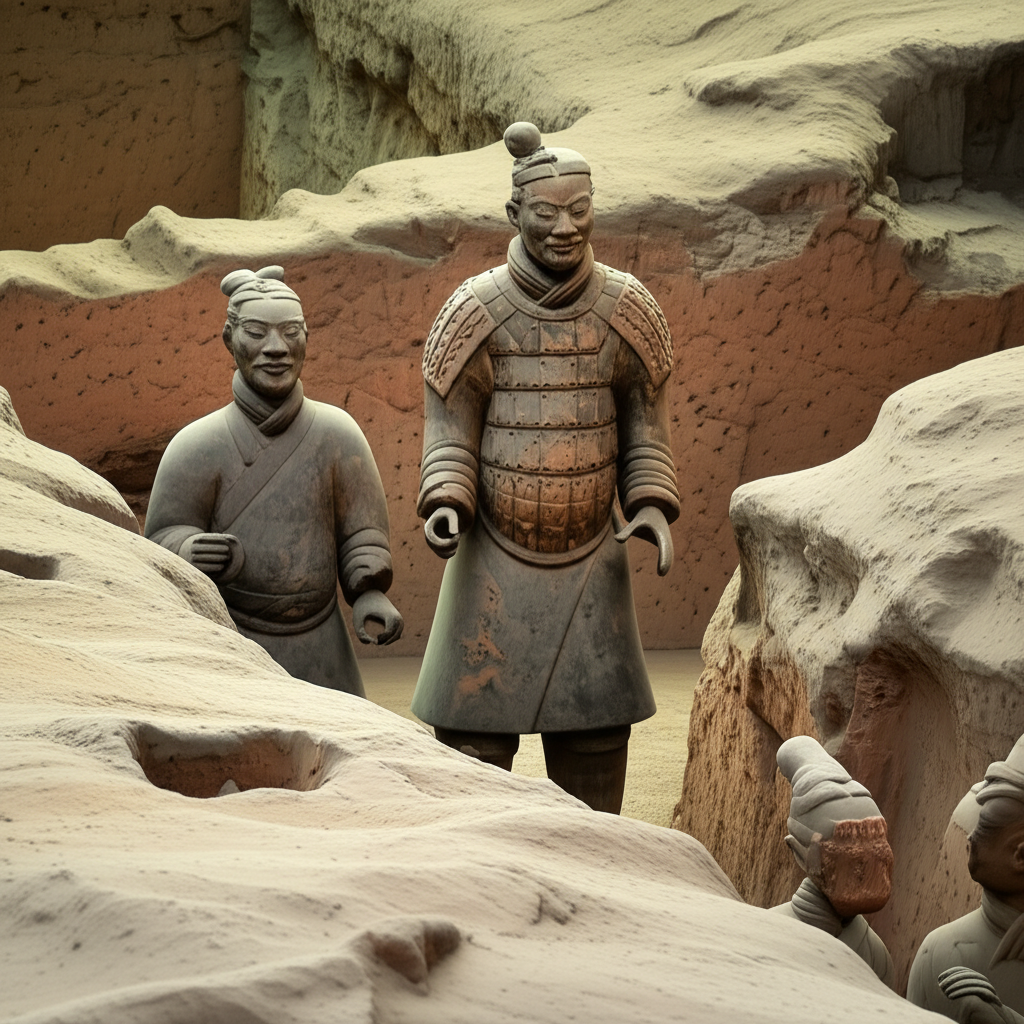
The serendipitous discovery in March 1974 near Xi’an represented a pivotal moment in understanding ancient Chinese history. Local farmers, while attempting to dig a well, unearthed fragments of a life-sized clay figure, initiating an unforeseen archaeological revelation. This was the first physical evidence of the vast subterranean garrison guarding the tomb of Qin Shi Huang, the first emperor of a unified China.
Initial investigations by provincial archaeologists quickly confirmed the magnitude of the find. The sheer scale of what became known as the Terracotta Warriors was staggering, and the subsequent systematic excavation of Pit 1 revealed thousands of infantrymen and cavalry. The arrangement of these figures in precise military formation provided a tangible model of Qin military strategy and hierarchy. This level of detailed realism, combined with sophisticated mass-production techniques, fundamentally altered scholarly perceptions of the dynasty’s logistical and organizational power.
The uncovering of this silent army offered unprecedented insight into the emperor’s vision for the afterlife and the immense resources he commanded. The site was not merely a collection of burial goods but a meticulously planned, life-sized replica of the Qin imperial guard. The find demonstrated a capacity for mobilization previously understood primarily through textual records, forever changing the field of Chinese archaeology and our view of this foundational dynasty.