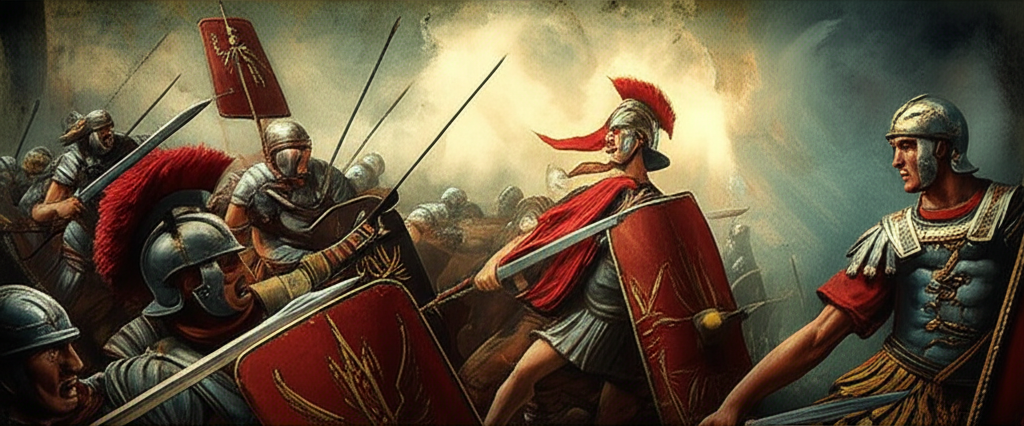
The suicide of Nero in June 68 AD precipitated a constitutional crisis that shattered the Pax Romana, revealing the dangerous truth that an emperor could be forged outside the walls of Rome. The subsequent chaotic interval, known as the Year of the Four Emperors, was not merely a sequence of usurpations but a profound structural test of the Empire’s military allegiance. The conflict demonstrated that the loyalty of provincial legions had superseded the authority of the Senate.
Galba, the first claimant, failed to comprehend the necessity of purchasing the loyalty of the Praetorian Guard. His austere policies alienated the soldiery, creating an opening for Otho to orchestrate a coup within the capital. Yet, Otho’s strategic position was immediately compromised by the revolt of the Rhine legions under Vitellius. The ensuing conflict culminated at the First Battle of Bedriacum, where Otho’s defeat underscored the tactical superiority of hardened frontier troops over the urban cohorts.
Vitellius, having secured the throne, proved incapable of administrative consolidation. His failure allowed Vespasian, stationed in Judea, to execute a superior grand strategy. Rather than rushing immediately to Italy, Vespasian secured control of Egypt, thereby holding Rome’s grain supply hostage. Simultaneously, his allies in the Danubian legions marched on Italy, defeating the Vitellians at the Second Battle of Bedriacum.
The eventual triumph of Vespasian brought an end to the anarchy and established the Flavian Dynasty. This period of strife permanently altered Roman political theory, establishing military capability and legionary support as the primary prerequisites for imperial legitimacy, rather than dynastic bloodline alone.