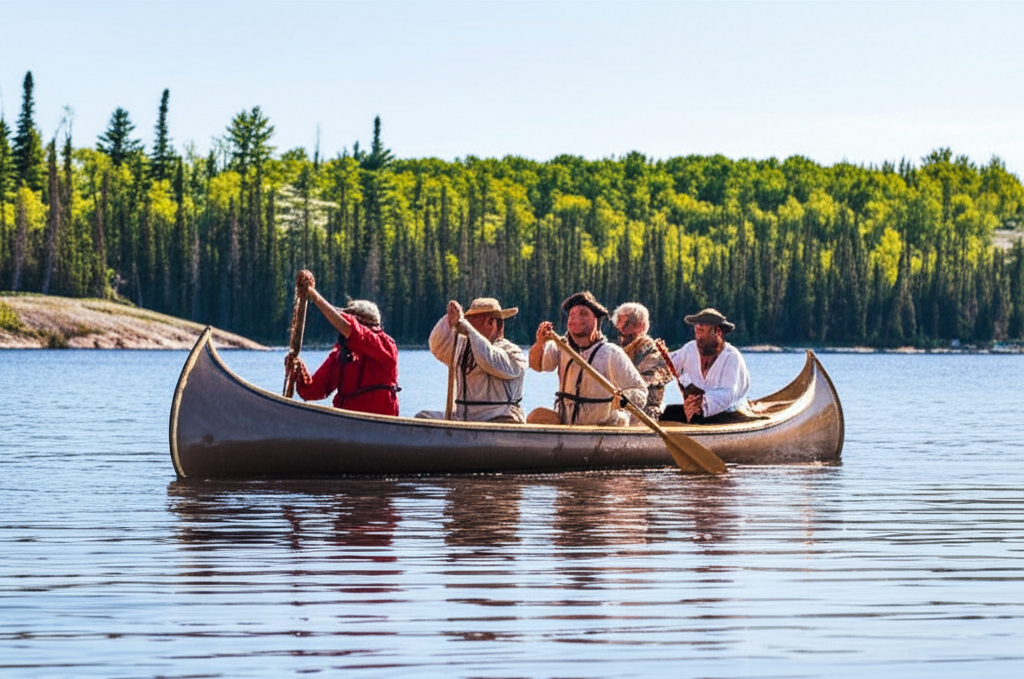
The voyageur represented the indispensable human engine of the North American fur trade. Their operational effectiveness was not a matter of simple endurance but of a highly refined system of labor and transport. The design of their primary watercraft, the birchbark canoe, was a strategic marvel, particularly the large canot du maître used on the Great Lakes, which was engineered for maximum cargo capacity while remaining light enough for overland transport. This balance allowed trading companies to move vast quantities of European goods into the interior and return with profitable cargoes of pelts, forming the economic foundation of the entire enterprise.
This system’s efficiency was most evident during the portage, the arduous process of carrying canoes and cargo around rapids or between waterways. A strict discipline governed this work, with each man expected to haul multiple 90-pound bundles, or pièces, over rough terrain at a relentless pace. This standardized load ensured that the entire brigade moved as a cohesive and predictable unit, minimizing costly delays.
This rigorous labor was structured by the engagement, a formal contract binding the man to a company, often for several years. This system provided the fur trade with a reliable and controlled workforce capable of overcoming the immense geographical challenges of the continent. Ultimately, the systematic and strenuous life of the voyageur was the critical logistical component that enabled the vast commercial expansion into the heart of North America.