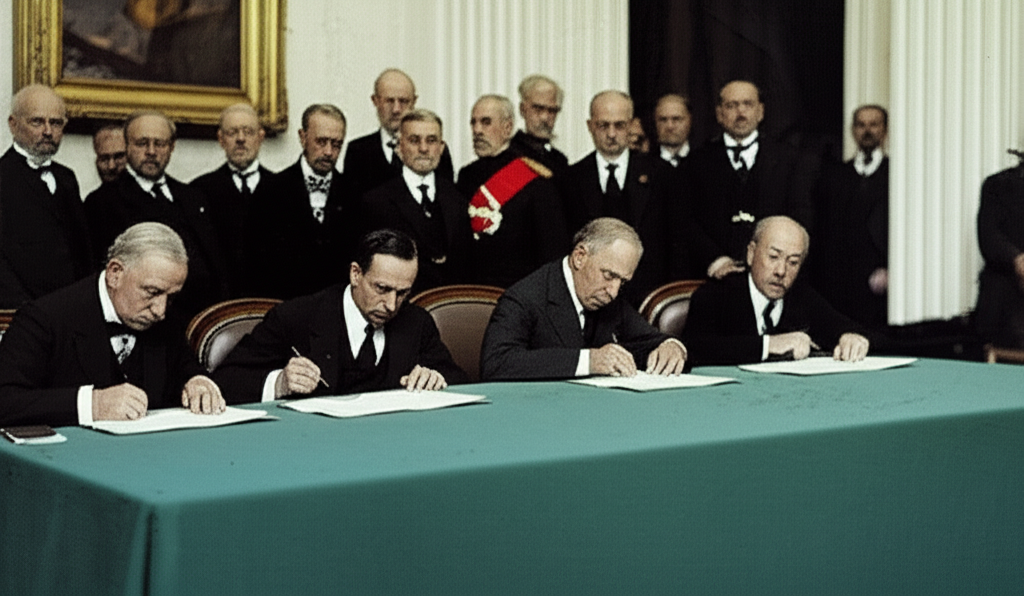
The Treaty of Ghent, signed on December 24, 1814, represented not a victor’s settlement but a pragmatic cessation of a costly and largely indecisive conflict. The negotiations leading to the treaty were shaped less by battlefield triumphs and more by strategic exhaustion on both sides of the Atlantic. For Great Britain, the immense strain of the Napoleonic Wars overshadowed the American theater, making a prolonged engagement an unnecessary diversion of resources. The United States, in turn, contended with a crippled economy, internal political dissent, and the stark reality that its primary war aims were becoming unattainable.
The core of the agreement was a return to the status quo ante bellum, a principle mandating the restoration of all conquered territory and pre-war boundaries. This approach effectively erased the territorial gains made during the War of 1812, including British-held forts in the Northwest and American-occupied parts of Upper Canada. Conspicuously absent from the final text were the central grievances that had sparked the war, such as the British practice of impressment and violations of American maritime rights. The end of the war in Europe had rendered these issues largely moot, allowing diplomats to sidestep the contentious points in favor of a swift conclusion. The treaty’s true significance lay not in resolving disputes but in ending the bloodshed, thereby establishing a new, more stable foundation for Anglo-American relations.