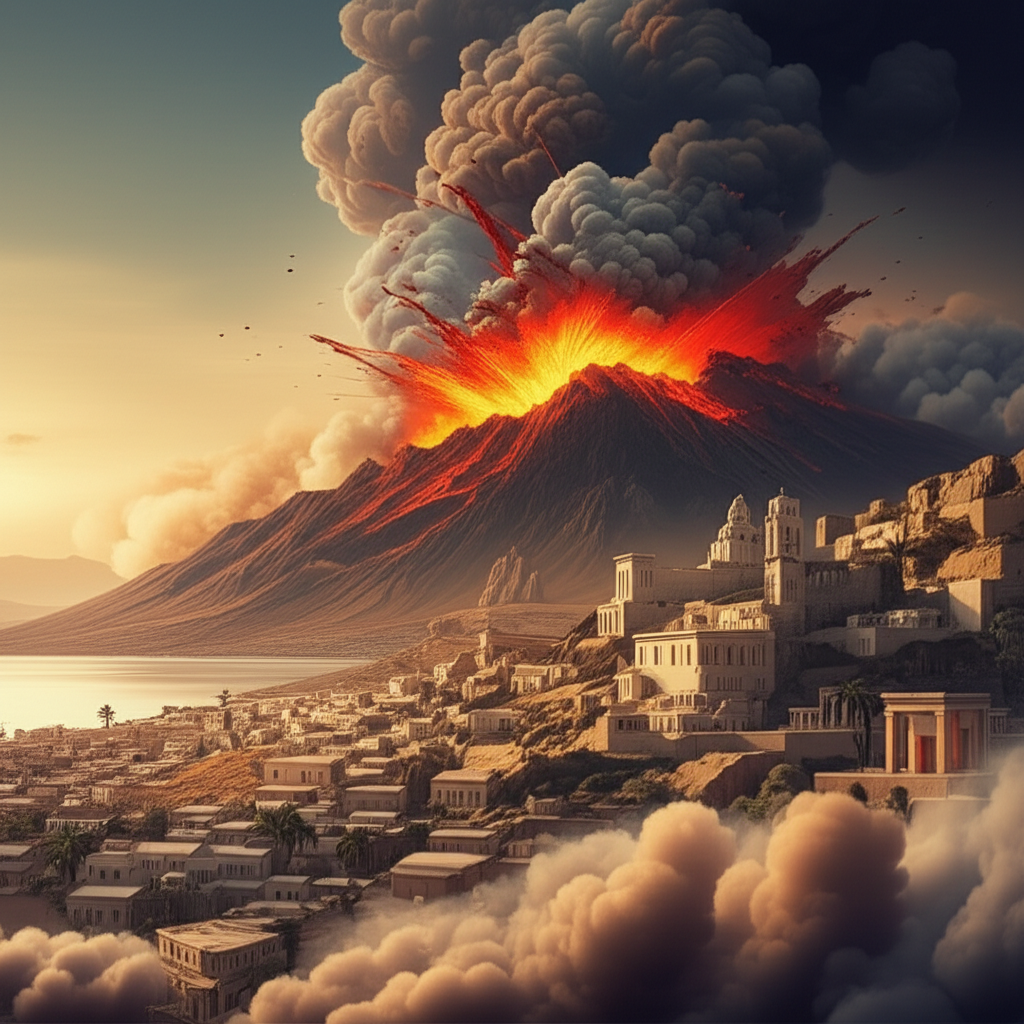
The cataclysmic Thera Eruption serves as a defining case study in the fragility of complex civilizations during the Late Bronze Age. This volcanic event did not merely alter the geography of the Aegean; it dismantled the strategic foundations of Minoan hegemony. While the immediate physical destruction of the settlement at Akrotiri was total, the broader geopolitical ramifications for Crete were far more insidious and structurally damaging.
The resulting tsunamis devastated the northern coast of Crete, effectively crippling the Minoan naval infrastructure. As a thalassocracy, the Minoan state relied entirely on maritime optimization for trade dominance and defense. The destruction of the fleet and port facilities severed the critical arteries of their commercial empire, isolating the island from its established markets in Egypt and the Near East. Without the ability to project power or secure resources, their economic optimization collapsed.
Furthermore, the significant deposition of volcanic ash disrupted agricultural output, leading to immediate resource scarcity and economic instability. This ecological shock likely undermined the political legitimacy of the palace administration, whose authority was predicated on a perceived connection to the divine and the control of surplus goods.
The Mycenaeans, rising powers from the Greek mainland, capitalized on this systemic weakness. Historical analysis suggests that these mainland warriors did not conquer a thriving empire, but rather occupied a destabilized state that had lost its strategic depth. The eruption acted as a decisive force multiplier for Minoan decline, transforming a robust civilization into a vulnerable target for inevitable annexation.