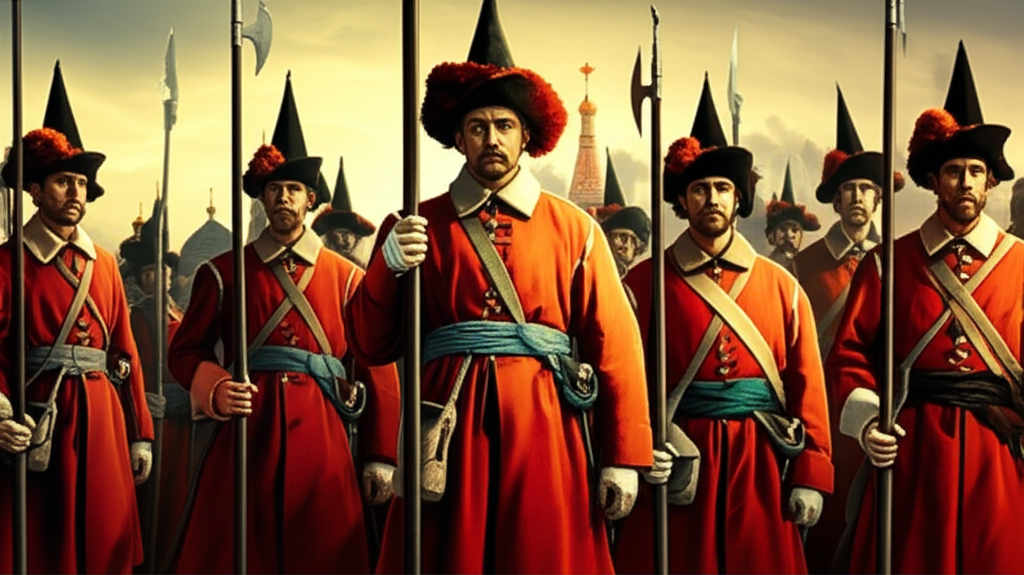
The establishment of the Streltsy under the reign of Ivan IV in the mid-16th century marked a pivotal evolution in Russian military organization. As the tsardom’s first professional standing army, these musketeers represented a departure from the traditional reliance on feudal levies. Their primary strategic value lay in providing the state with a consistent and disciplined force proficient in firearms, a crucial advantage in the numerous campaigns that expanded Russia’s borders.
Over time, the Streltsy corps evolved beyond a purely military function. They were granted land, trade privileges, and the right to pass their status to their sons, effectively transforming them into a distinct and hereditary social caste based in Moscow and other major towns. This unique position, however, fostered a powerful collective identity that increasingly intervened in state politics. Their proximity to the Kremlin gave them significant influence over court affairs and succession, culminating in several uprisings throughout the 17th century.
Ultimately, their entrenched conservatism and political unreliability became incompatible with the sweeping reforms of Peter the Great. Viewing them as an obstacle to his vision of a modern, Western-style army, Peter ruthlessly suppressed their final revolt in 1698. The subsequent disbandment of the Streltsy was a decisive act, closing a chapter on Russia’s early professional soldiery to make way for a new military paradigm based on European models.