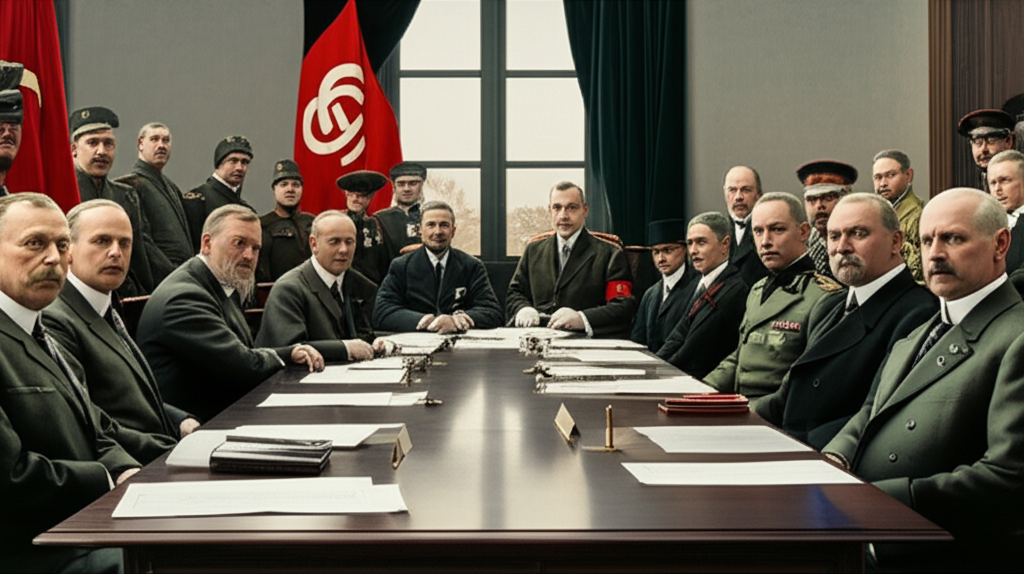
The Treaty of Brest-Litovsk, signed on March 3, 1918, represented a decisive geopolitical rupture that fundamentally altered the trajectory of the First World War. Far from a mere cessation of hostilities, the agreement crystallized the divergent strategic priorities of the belligerents. The Central Powers, led by the German Empire, sought to systematically dismantle the Russian sphere of influence, while the nascent Bolshevik regime prioritized revolutionary survival over territorial integrity.
Strategically, the treaty facilitated a massive realignment of German military assets. By neutralizing the Eastern Front, the German High Command executed a rapid redeployment of veteran divisions to the West, aiming to force a conclusion in France before American intervention could fully materialize. This optimization of military resources was heavily predicated on the economic exploitation of the newly acquired territories, particularly the agricultural wealth of Ukraine, which Germany viewed as essential for circumvention of the Allied naval blockade.
For the Soviet delegation, led initially by Leon Trotsky, the acceptance of such draconian terms was a calculated gamble. Vladimir Lenin argued that the sacrifice of vast swathes of land—including Poland, the Baltic states, and Finland—was the necessary price for “breathing space.” This diplomatic retreat allowed the revolutionaries to turn their focus inward, consolidating power against domestic opposition without the burden of external warfare.
Although the treaty was formally annulled following the German armistice in November 1918, its significance remained profound. It redrew the map of Eastern Europe, establishing a precedent for the independent status of nations bordering Russia. Ultimately, the agreement served as a stark historical lesson in the ruthless pragmatism required when balancing ideological ambitions against the immediate necessities of statecraft and military survival.