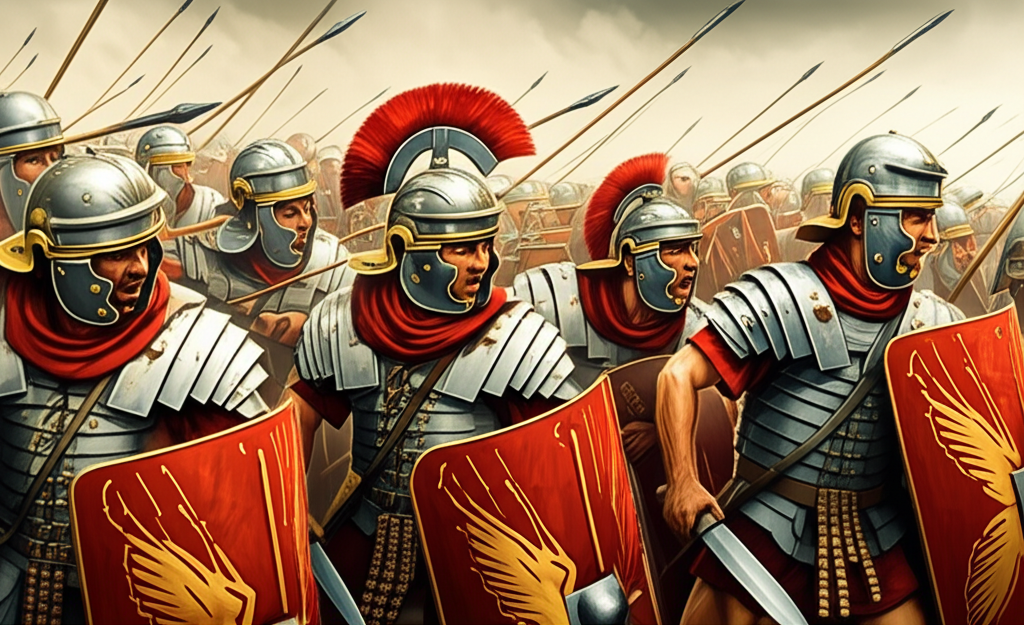
Within the complex machinery of the mid-Republican era, the Hastati formed the vanguard of the distinct triplex acies formation. Comprising the younger citizens, these soldiers were not merely skirmishers but the primary shock troops tasked with breaking the initial cohesion of the enemy line. Their deployment was calculated to exploit the psychological and physical fatigue of the opposing force following the preliminary volley of light infantry engagement.
The tactical optimization of the Maniple system relied heavily on the aggressive capability of this front line. Equipped with the pilum, a heavy javelin designed to bend upon impact, the Hastati rendered enemy shields useless before closing the distance. This initial barrage created gaps in the opposing shield wall, which were immediately exploited with the gladius. The strategic intent was to shatter the enemy’s formation through sheer aggressive momentum and shock rather than prolonged attrition.
Crucially, the Hastati were designed for fluid withdrawal if the offensive faltered. The spacing between maniples allowed for a seamless retreat through the gaps of the Principes, the second and more experienced heavy infantry line. This rotational engagement ensured that the enemy, exhausted from fighting the first wave, immediately faced a fresh, superior force. This layered approach optimized the legion’s endurance, transforming the frontline into a flexible instrument of gradual escalation rather than a static wall of defense.