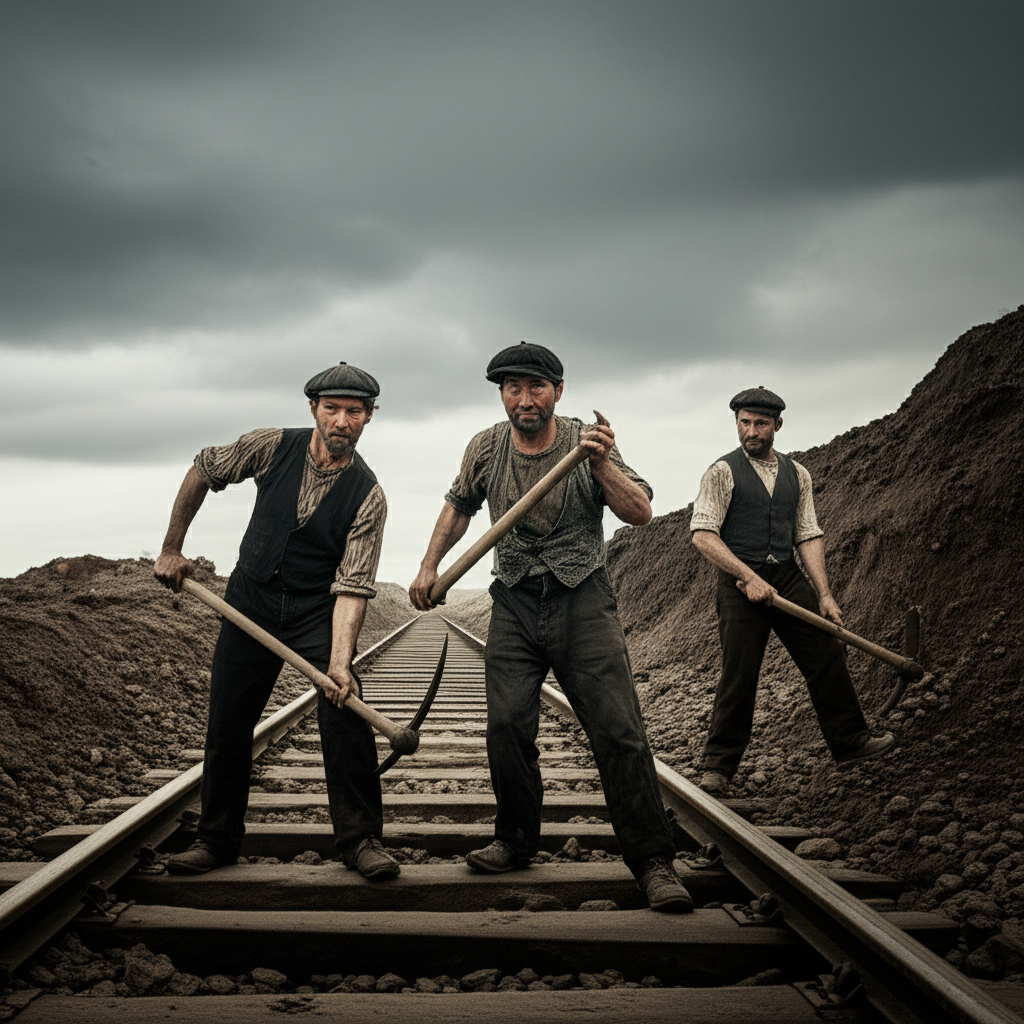
In the annals of nineteenth-century industrialization, few figures commanded as much mixture of awe and apprehension as the Navvy. Originally assembled for canal navigation, this distinct class of labourers became the primary engine behind the railway mania that transformed the topography of Britain. Their contribution was not merely one of brute force, but of a specialized, rhythmic efficiency that allowed for the rapid excavation of cuttings and the raising of colossal embankments using little more than pickaxes, shovels, and gunpowder.
The operational success of these itinerant armies relied heavily on the Butty System, a method of subcontracting that fundamentally altered labour relations. Rather than receiving direct wages from the railway companies or chief engineers, men formed autonomous gangs that negotiated piecework rates. This structure incentivized speed and immense physical output, often at the cost of personal safety. A single labourer was expected to shift upwards of twenty tons of earth and rock daily, a feat sustained by a high-calorie diet of beef and ale that far exceeded the nutritional intake of the average agricultural worker.
Socially, the navvy lived a transient existence, insulated from the settled Victorian society that surrounded the worksites. Encampments of rough shanties followed the construction of the Permanent Way, governed by internal codes of conduct rather than civil law. The economic reality was frequently exploitative; wages were often paid in credit at the company-owned Tommy Shop, a practice that tethered the worker to his employment through debt and inflated prices for essential provisions. Despite these hardships, the viaducts and tunnels that pierce the British landscape remain enduring monuments to their collective discipline and distinct social organization.