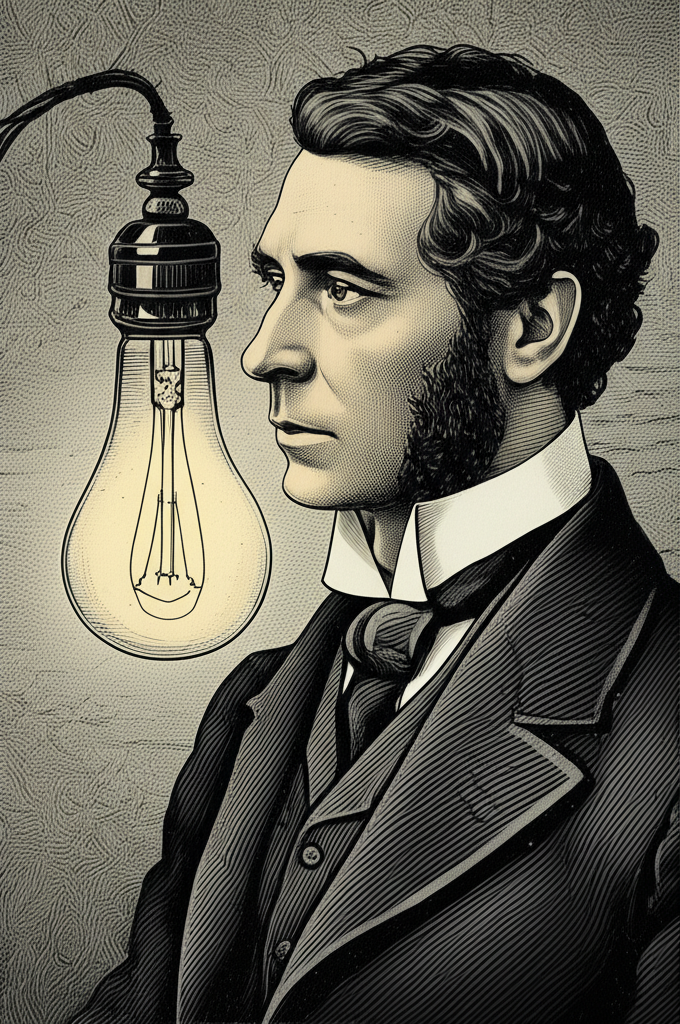
While Thomas Edison often dominates the popular narrative regarding the electrification of the modern world, the technical achievements of Sir Joseph Swan provided the foundational chemistry and engineering requisite for a functional incandescent light bulb. Commencing his experiments in Sunderland during the 1850s, Swan correctly identified that the generation of sustained light required a filament capable of withstanding intense heat without immediate combustion.
His early iterations, utilizing carbonized paper strips enclosed in evacuated glass bulbs, proved ephemeral. The primitive vacuum pumps of the era were incapable of removing enough oxygen, causing the conductor to burn away rapidly. The trajectory of this invention shifted dramatically with the advent of the Sprengel air pump in 1865. This mechanism allowed for the evacuation of air to a degree previously unattainable, creating the high vacuum necessary to prevent filament oxidation.
Capitalizing on this advancement, Swan refined his approach, transitioning from stout carbon rods to a slender, treated parchmentized cotton thread. This optimization increased electrical resistance and solved the critical issue of longevity, leading to the successful public demonstration of his lamp in Newcastle in 1879.
Swan’s strategy differed from his American counterpart; whereas Edison sought a high-resistance filament specifically for parallel circuit distribution, Swan focused initially on the chemical stability of the carbon itself. Ultimately, the inevitability of patent litigation necessitated a strategic alliance. The formation of the Edison and Swan United Electric Light Company merged Swan’s superior cellulose filament technology with Edison’s efficient manufacturing and distribution models, effectively standardizing the method by which the industrialized world was illuminated.