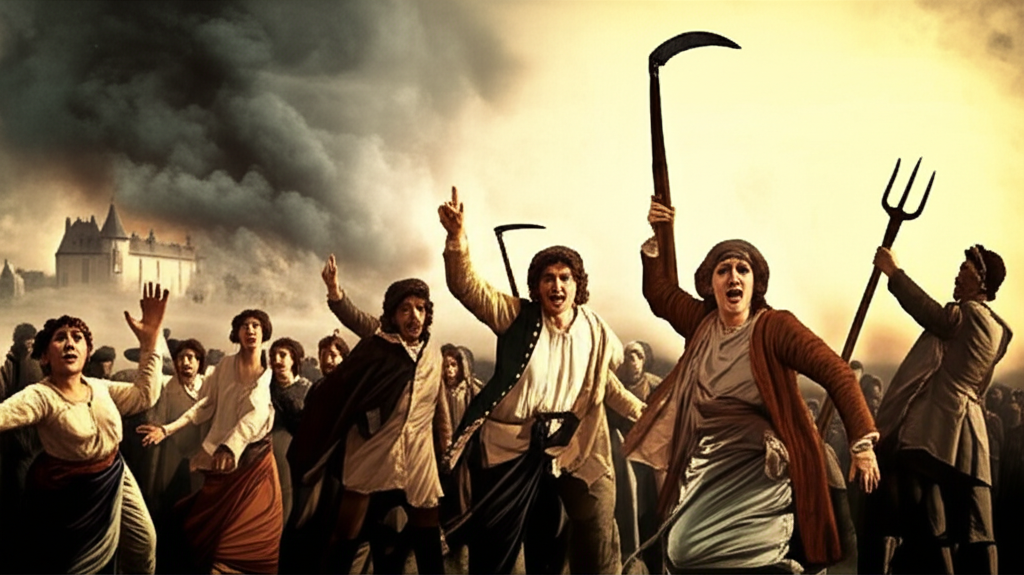
The Great Fear (la Grande Peur), which swept across the French countryside during the summer of 1789, represented a critical escalation of the revolutionary fervor. This was not a coordinated uprising but a decentralized wave of rural panic, fueled by longstanding economic distress and widespread rumors of an “aristocratic conspiracy.” The narrative, which posited that nobles were employing brigands to destroy harvests and punish the peasantry, found fertile ground in a populace already wary of the old order’s intentions.
The peasant response, however, rapidly evolved from defensive panic to offensive action. Rather than simply guarding their villages, rural communities organized into militias and turned their collective force against the most tangible symbols of feudal authority. They besieged châteaux, not primarily for plunder, but to locate and destroy the manorial rolls and charters (terriers) that legally documented their feudal obligations. This targeted destruction of records was a strategic masterstroke, aiming to dismantle the legal framework of servitude from the ground up.
The political ramifications of the Great Fear were profound. News of the widespread insurrection forced the National Constituent Assembly to confront the peasant grievances directly. The famous decrees of August 4, 1789, which formally abolished feudal rights and privileges, were a direct consequence of this rural pressure. The Great Fear thus demonstrated the power of mass action to accelerate the political timeline of the French Revolution, compelling the new government to enact radical reforms far more swiftly than it might have otherwise contemplated.