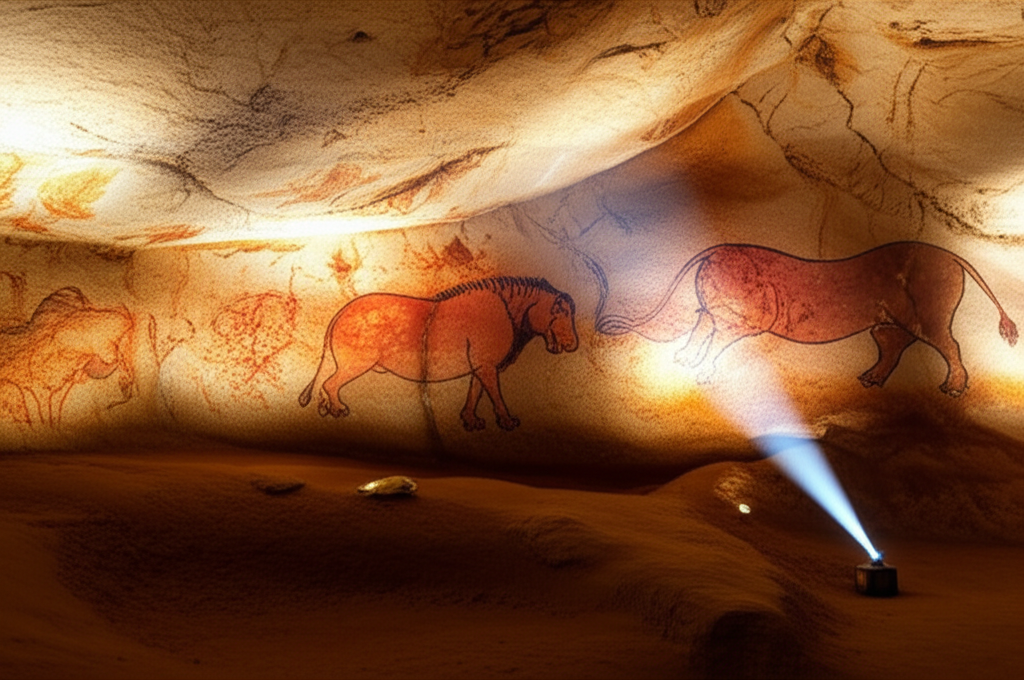
The discovery of Chauvet Cave in December 1994 represented a fundamental paradigm shift in the study of prehistoric humanity. The cavern, sealed by a rockfall over twenty millennia ago, preserved a gallery of Paleolithic art of unprecedented sophistication and scale. Its discovery immediately challenged long-held theories concerning the linear progression of artistic skill, as the works within were both the oldest and, in many respects, the most advanced ever found.
The artists of Chauvet demonstrated a mastery of technique previously thought to have developed much later. They employed scraping and incising to prepare the limestone canvases, creating a sense of depth before applying pigments. The panels depict a dynamic world, featuring not just common prey animals but also formidable predators like cave lions, panthers, and bears. Through skillful use of shading and perspective, these figures convey a remarkable sense of movement and vitality.
Unlike the static, individual portraits common in other sites, the compositions at Chauvet often suggest complex narratives. The arrangement of animals in a procession or confrontation indicates a highly developed symbolic and cognitive capacity. The cave’s pristine condition provided an unparalleled window into the ritual and artistic life of Aurignacian culture, permanently altering our understanding of early human creativity.