
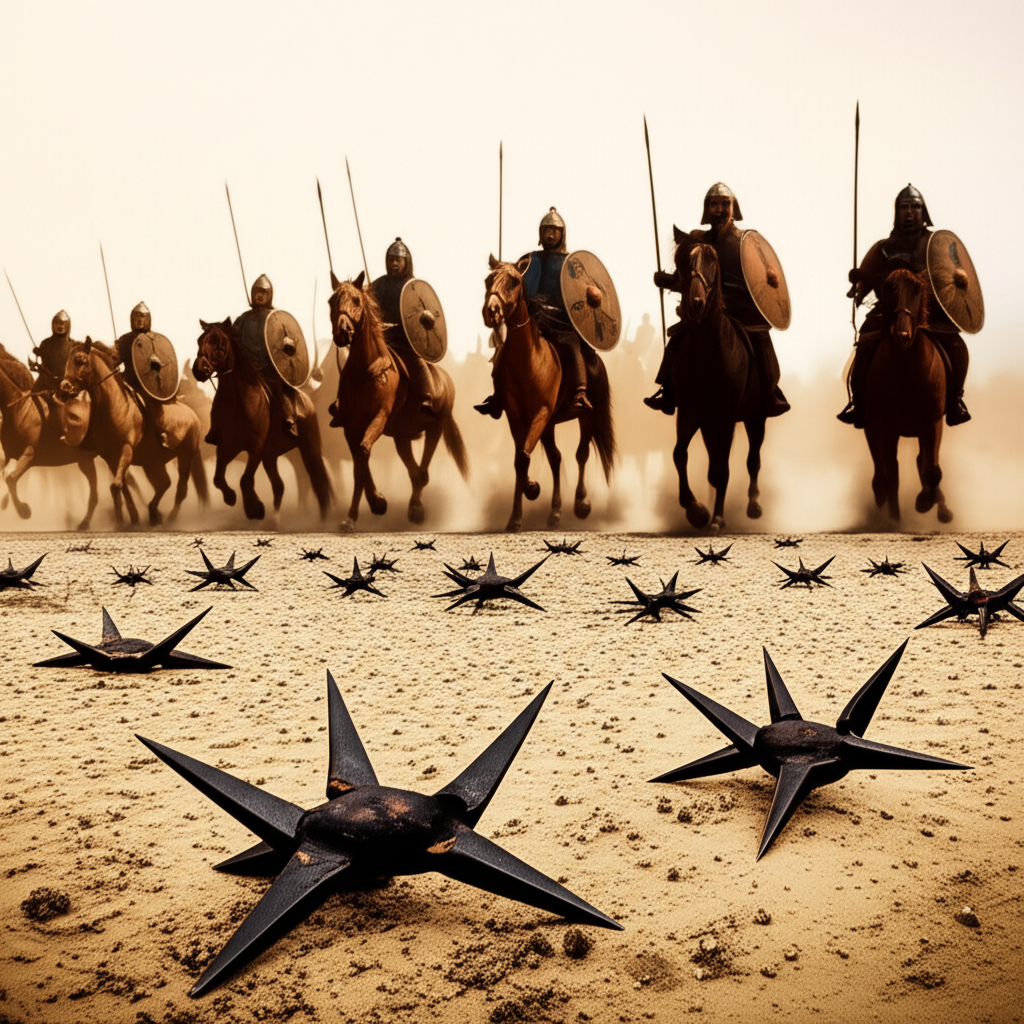
The deployment of the caltrop—known to the Romans as murex ferreus—represented a pivotal evolution in asymmetric warfare. Military architects utilized these tetra-pointed iron devices not merely as casual obstructions, but as sophisticated tools for area denial. When scattered across the vanguard, they effectively negated the primary advantage of heavy cavalry: momentum. By compromising the stability of the terrain, infantry formations could force mounted adversaries into unfavorable engagements without requiring immediate physical confrontation.
Strategic optimization of these devices required precise placement rather than random distribution. Experienced field commanders avoided indiscriminate scattering, preferring to create invisible barriers that funneled enemy horses into concentrated zones of engagement or protected vulnerable flanks from encirclement. The structural genius of the weapon ensured that one spike always pointed upward, guaranteeing that a galloping charger would sustain a debilitating injury to the soft frog of the hoof.
The resulting chaos was often catastrophic; a single maimed steed could disrupt the cohesion of an entire cavalry charge, causing lines to falter and discipline to collapse before the lines engaged. The panic spread rapidly as horses, sensing the ground itself was hostile, refused to advance.
From an economic perspective, the device offered a supreme return on investment. The neutralization of a trained warhorse, representing years of breeding and significant financial capital, was achieved through a shard of iron of negligible cost. This ruthless efficiency cemented the caltrop as a staple of defensive strategy, effectively leveling the battlefield against superior mounted forces throughout the classical era.


