Synthesizing Grief and Empire: The Architectural Ideology of the Taj Mahal
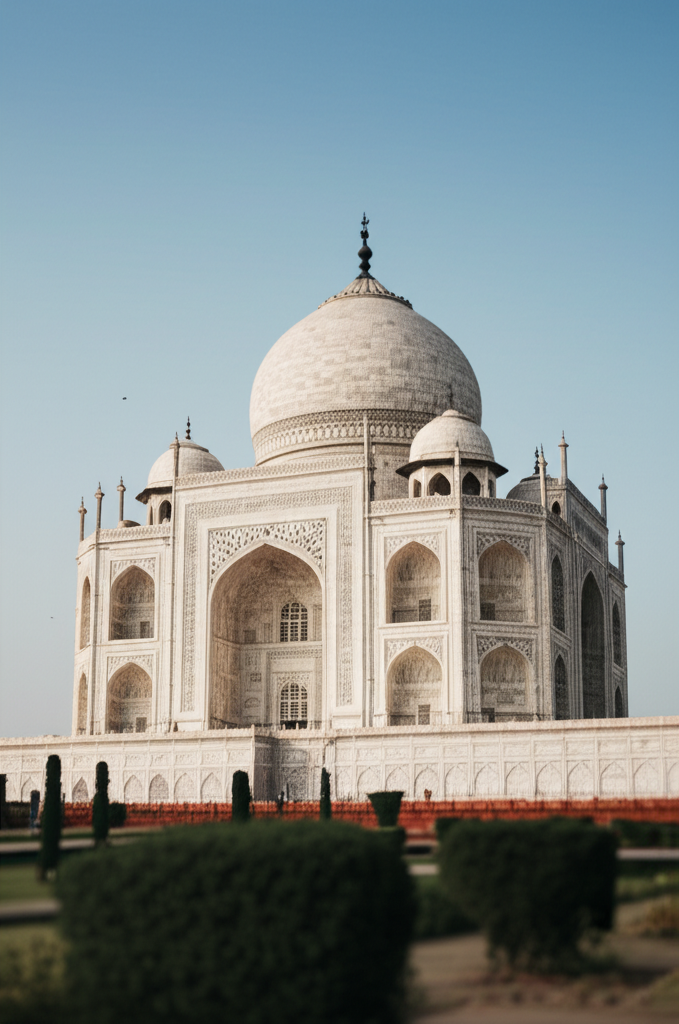
The Taj Mahal transcends its function as a mausoleum, operating as a sophisticated instrument of Mughal imperial ideology. While rooted in Shah Jahan’s profound personal grief, its design articulates a powerful political and theological statement. The monument’s perfect symmetry and hierarchical organization, from the main gate to the tomb itself, mirror the idealized cosmic order that the emperor sought to embody on Earth. This is not merely a memorial but a terrestrial throne of God, a concept central to Mughal sovereignty.
The architectural program masterfully fuses the personal with the political. The four-part charbagh garden represents not only the Quranic vision of paradise for Mumtaz Mahal but also the emperor’s dominion over the natural world—a classic symbol of imperial control. Furthermore, the calligraphic inscriptions, primarily selections from the Quran focusing on themes of divine judgment, serve a dual purpose. They offer solace for the departed soul while simultaneously reinforcing Shah Jahan’s position as a just and divinely sanctioned ruler.
By mobilizing the vast resources of the empire to source materials like makrana marble and lapis lazuli, Shah Jahan transformed his private sorrow into an unparalleled public display of wealth and power. The Taj Mahal is therefore the ultimate synthesis: an architectural manifestation where the emperor’s love, loss, and legacy are rendered inseparable from the absolute authority of the Mughal state.