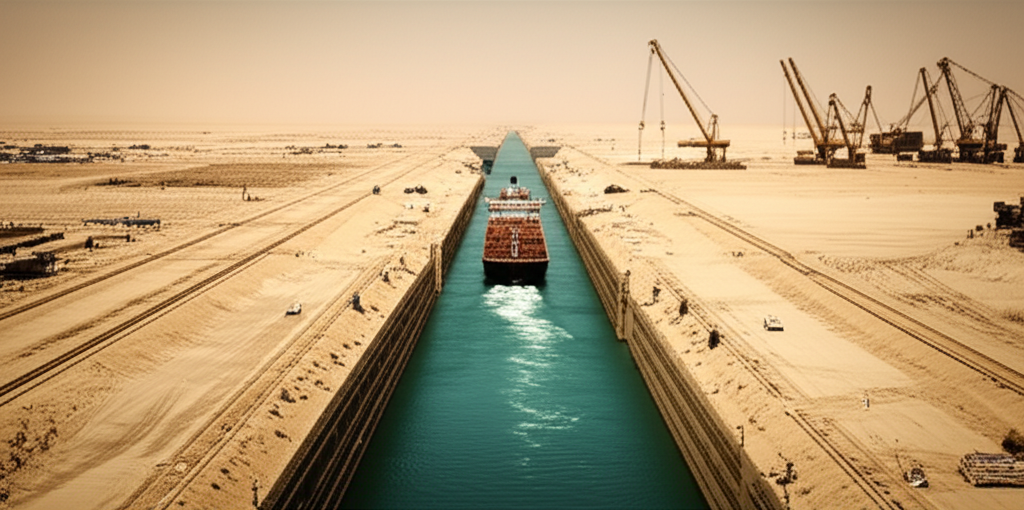
The construction of the Suez Canal, inaugurated in 1869, stands as a monumental event in the history of global engineering and geopolitics. Spearheaded by the French diplomat Ferdinand de Lesseps, the project represented a formidable challenge, requiring a decade of immense labor to excavate a 120-mile waterway through the Egyptian desert, thereby linking the Mediterranean Sea with the Red Sea.
The strategic implications of this new maritime passage were immediate and transformative. By creating a direct route between Europe and Asia, the canal rendered the lengthy and hazardous circumnavigation of Africa obsolete for commercial and military fleets. This optimization of trade routes slashed voyage times by weeks, significantly reducing shipping costs and accelerating the exchange of goods and information.
For the British Empire, the canal became an indispensable artery, the “lifeline to India,” securing a swift passage for its navy and merchant vessels. Consequently, control over the waterway became a central point of international rivalry, fundamentally altering the balance of power in the region. The canal’s opening not only reshaped patterns of global trade but also intensified European colonial ambitions, cementing its legacy as one of the most strategically significant artificial waterways in the world.