
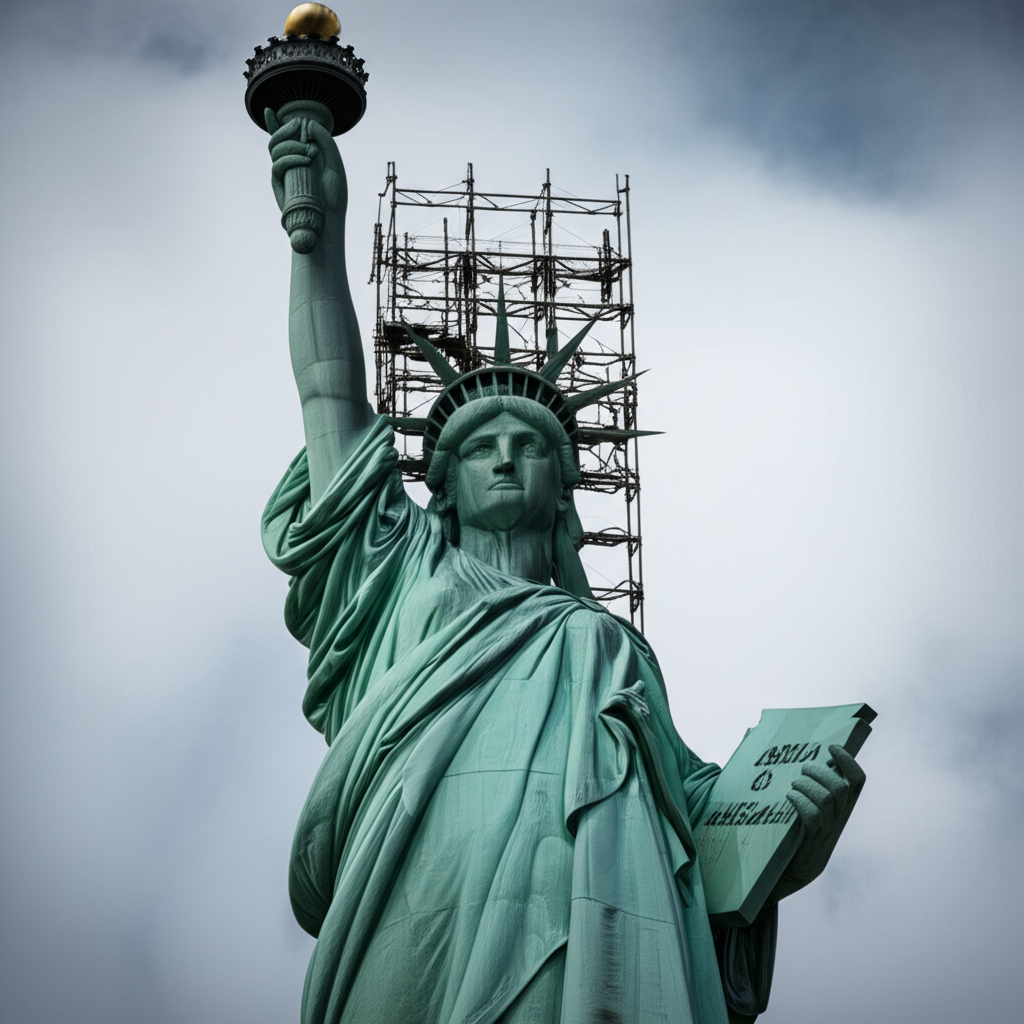
The monumental scale of the Statue of Liberty presented a formidable engineering challenge, one that sculptor Frédéric Auguste Bartholdi could not solve alone. The ultimate success of the project resided not in its visible copper shell, but in a revolutionary internal structure conceived by the celebrated engineer, Gustave Eiffel.
Eiffel’s primary innovation was the design of a massive iron pylon and skeletal framework to serve as the statue’s spine. This central tower was engineered to bear the full weight of the structure and anchor it to its pedestal. Extending from this pylon, a secondary iron skeleton was meticulously shaped to follow the contours of the copper skin. This internal armature was critical not only for supporting the statue’s immense load but also for providing the flexibility required to withstand the powerful winds of New York Harbor.
The statue’s exterior was formed from hundreds of copper plates, hammered into shape using the repoussé technique. These thin sheets were attached to the internal skeleton by a network of iron armature bars. This system cleverly allowed the copper skin to move independently of the rigid frame, accommodating thermal expansion and contraction without causing catastrophic stress fractures. This separation of skin and skeleton was a masterstroke, ensuring the monument’s longevity against the forces of nature.


