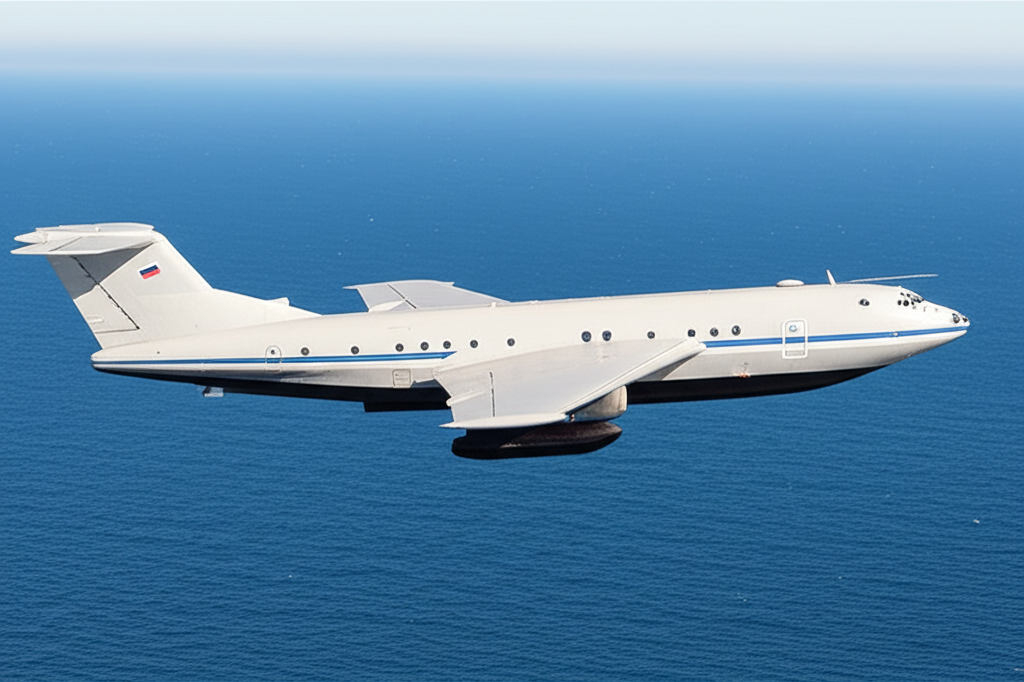
The emergence of the Lun-class ekranoplan from the secretive Soviet military-industrial complex represented a unique strategic gambit of the late Cold War. Known colloquially as the “Caspian Sea Monster,” this vehicle was not merely a technological curiosity but a purpose-built anti-ship weapon system. Its design was a direct response to the dominance of Western naval carrier groups. By harnessing the ground effect—an aerodynamic principle allowing for flight at extremely low altitudes over a flat surface—the Lun could achieve immense speeds while remaining largely invisible to conventional ship and airborne radar systems.
The primary mission profile for this formidable machine was a high-velocity, low-altitude approach, culminating in the launch of its six P-270 Moskit supersonic anti-ship missiles. This strike capability made it a singular threat, capable of delivering a devastating blow to a carrier battle group before a conventional defense could be mounted. Its operational theater, however, was largely confined to the expansive but enclosed waters of the Caspian and Black Seas. The immense logistical footprint and specialized maintenance required for its eight powerful turbofan engines limited its strategic flexibility.
Ultimately, the Lun-class ekranoplan was an extraordinary solution to a highly specific military problem. Its development showcased a brilliant, if unconventional, approach to asymmetrical naval warfare. With the dissolution of the Soviet Union and the shifting strategic priorities that followed, this marvel of engineering was rendered obsolete, a relic of a technological arms race defined by audacious and singular concepts.