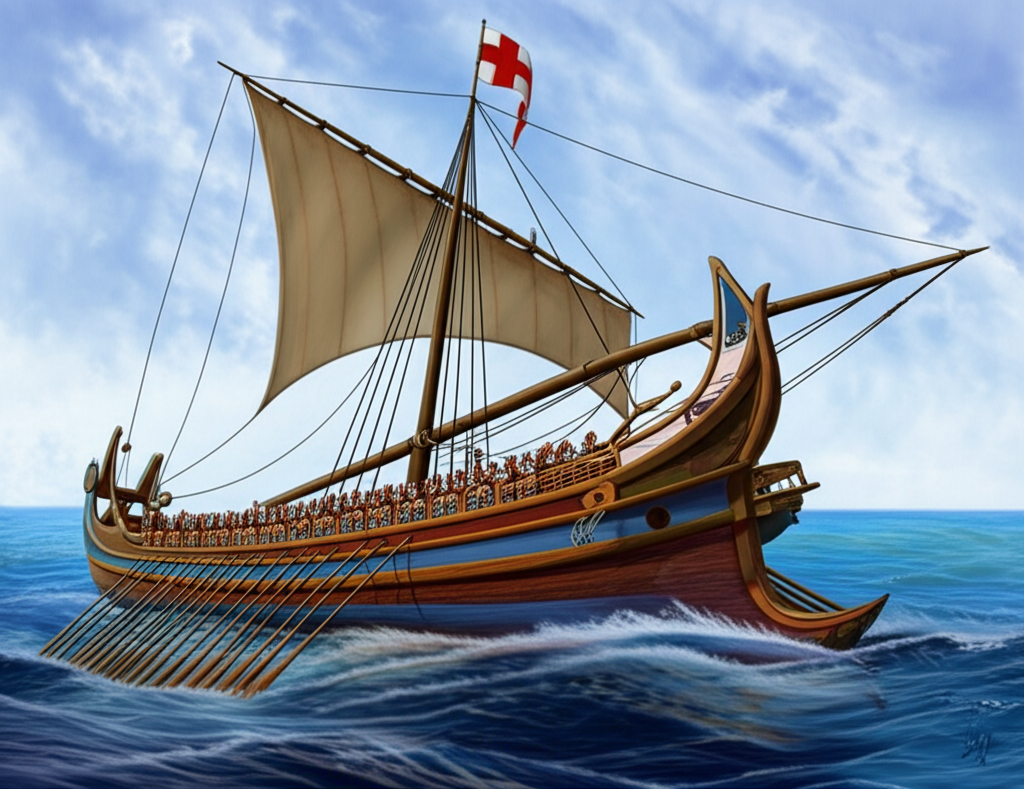
The emergence of the corvus during the First Punic War represented a profound tactical shift in ancient naval warfare. Confronted by the superior seamanship of the Carthaginian navy, Roman military strategists devised this boarding bridge to nullify their opponent’s advantage in maneuverability and ramming. The device effectively transformed maritime engagements into extensions of land battles, an arena where the disciplined Roman infantry held undisputed superiority.
The tactical application of the corvus was straightforward yet brutally effective. Roman vessels would maneuver close enough to an enemy ship to drop the heavy, spiked bridge onto its deck. Once secured, legionaries would storm across, overwhelming the opposing crew in close-quarters combat. This approach fundamentally altered the calculus of naval conflict, prioritizing boarding actions over the intricate ramming techniques that had previously defined sea battles in the Mediterranean. The success of this innovation was demonstrated decisively at the Battle of Mylae.
Despite its initial success, the corvus presented significant engineering challenges. The immense weight of the apparatus, positioned high on the prow, rendered Roman warships top-heavy and dangerously unstable in rough seas. Historical accounts suggest that this design flaw contributed to the catastrophic loss of entire fleets during storms. As Roman naval experience grew and their ship designs improved, the reliance on this crude but effective tool diminished, eventually leading to its abandonment in favor of more conventional naval tactics.