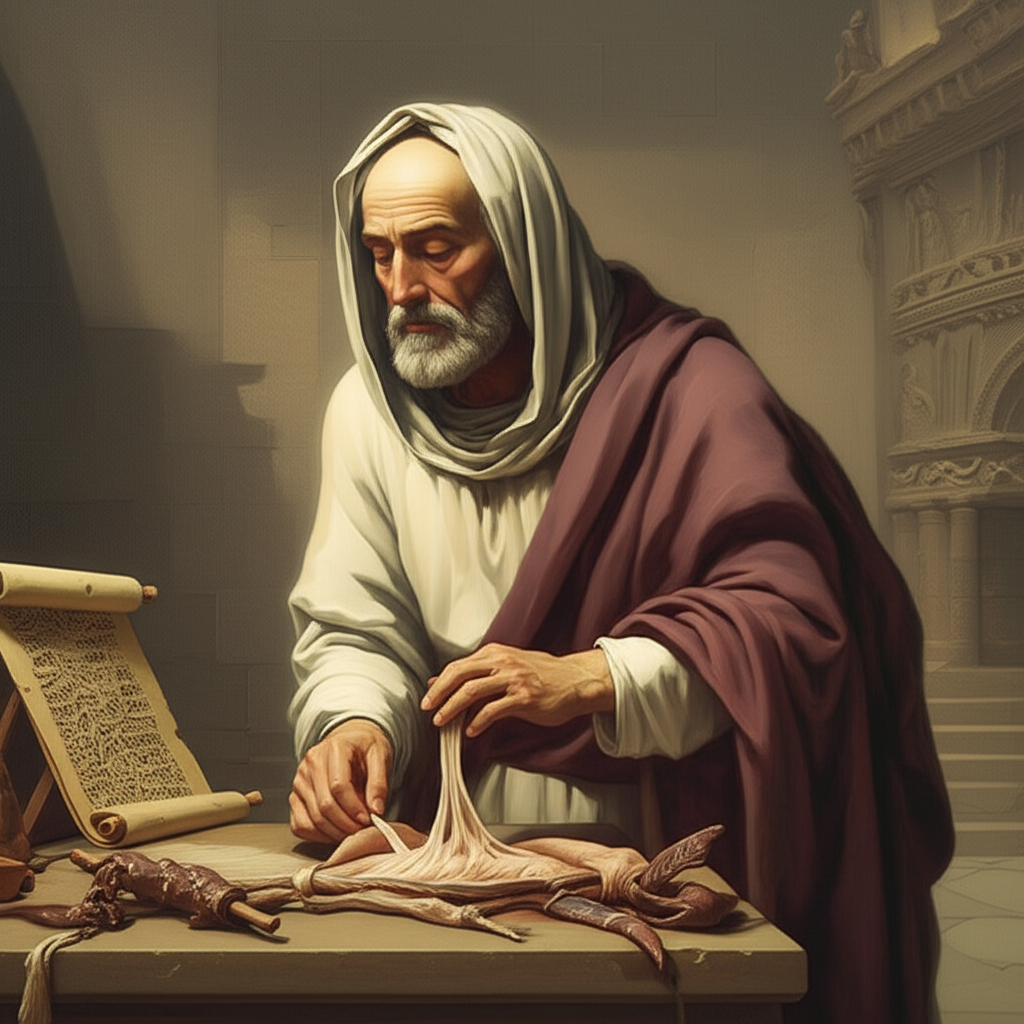
Within the complex machinery of the Roman state, the preservation of the Pax Deorum demanded more than mere piety; it required the technical precision provided by the Haruspices. Inheritors of the ancient Etrusca Disciplina, these specialized diviners functioned not as mystics, but as highly trained interpreters of divine will, operating independently from the college of Augurs. Their primary utility lay in the strategic analysis of prodigies and lightning, yet their most critical function remained extispicy, the rigorous examination of sacrificial entrails.
The methodology employed was systematic rather than intuitive. Upon the sacrifice of a victim, the Haruspex analyzed the liver, viewing the organ as a tangible microcosm of the celestial sphere. Historical evidence suggests the liver was mapped into distinct zones, each governed by specific deities. During this inspection, the practitioner looked for specific indicators:
The presence and shape of the caput iecoris (the head of the liver).
The texture and color of the tissue.
Distinctions between the pars familiaris (representing the inquirer) and the pars hostilis (representing the enemy).
This ritualized consultation offered military commanders and the Senate a vital mechanism for optimizing decision-making. Before engaging in battle or convening assemblies, the approval of the Haruspices provided a necessary political and theological mandate. If the signs were unfavorable, the ritual allowed for a tactical delay or a repetition of the sacrifice, known as instauratio*, until favorable conditions were achieved. Consequently, the Haruspices served as essential auditors of the supernatural, ensuring that Roman ambition remained aligned with cosmic order to legitimize state action.