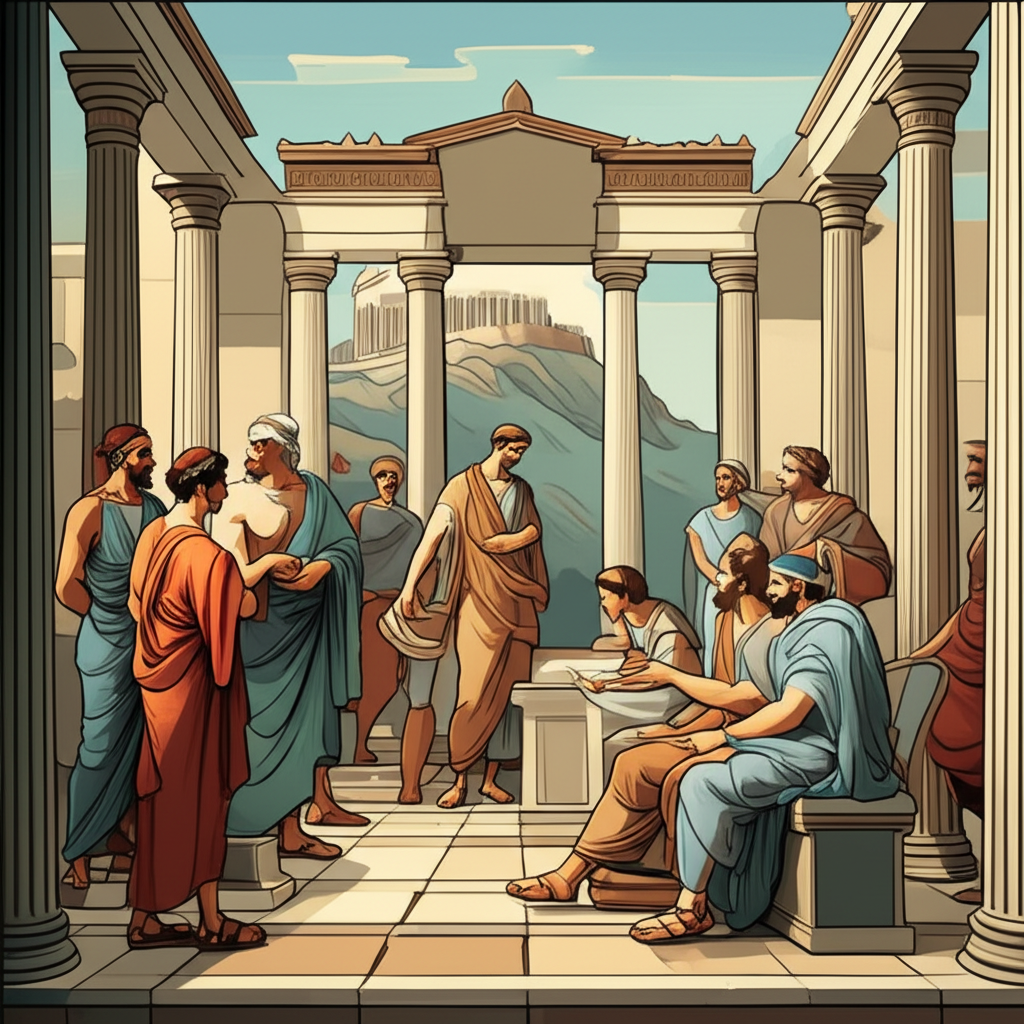
The effective administration of Athenian democracy rested heavily upon the Prytaneis, the standing executive committee of the Boule. This rotating body, composed of fifty councillors from one of the ten Attic tribes, served for one-tenth of the year, ensuring continuous governmental oversight. Their constant availability, living at public expense in the Tholos, represented a crucial logistical optimization. This system provided the Athenian state with a permanent, responsive administrative core capable of addressing daily affairs and emergencies without having to convene the full council or assembly on short notice.
The primary strategic function of the Prytaneis was to manage the flow of state business. They prepared the agenda for meetings of the Boule and the Ecclesia, a process critical for orderly deliberation. By receiving dispatches, meeting with ambassadors, and drafting preliminary decrees (probouleumata), they filtered and organized the immense volume of civic matters. This gatekeeping role was not one of censorship, but of procedural necessity; it ensured that the larger deliberative bodies could focus on well-defined proposals rather than procedural chaos.
Furthermore, one of the Prytaneis was chosen by lot each day to serve as the epistates, or chairman. This individual held the keys to the treasury and the state seal, presiding over any meetings of the Council or Assembly held that day. This daily rotation of ultimate executive authority was a profound safeguard against the concentration of power, cementing the Prytaneis as a key mechanism for both the efficiency and the integrity of the democratic process.