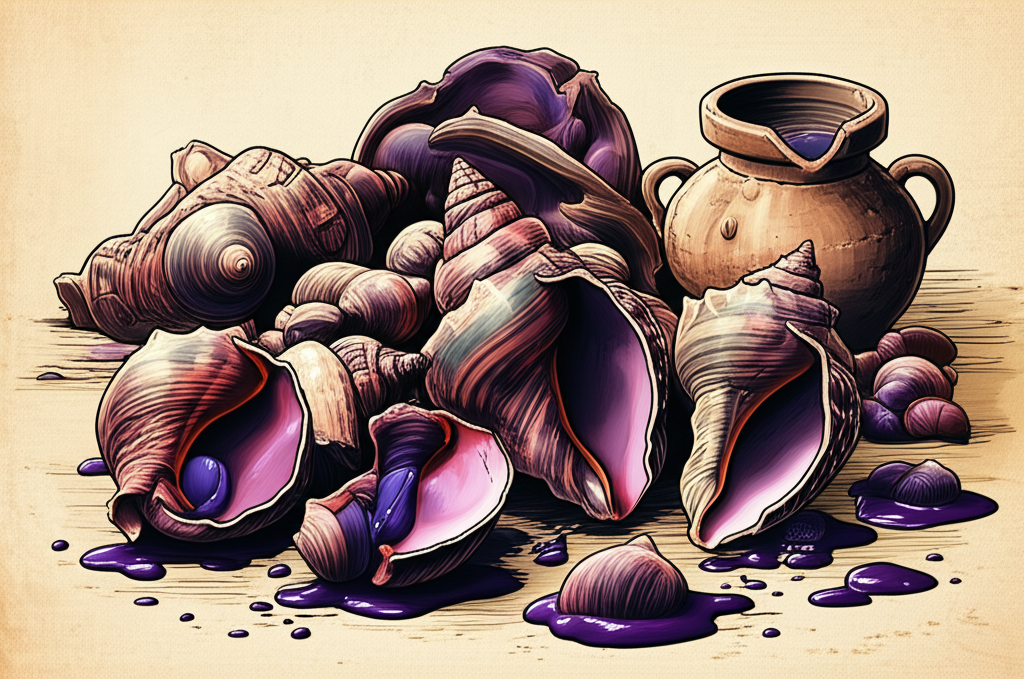
The production of Tyrian purple was a masterful and closely guarded Phoenician enterprise, representing a significant industrial undertaking in the ancient world. The process commenced with the large-scale harvesting of specific marine mollusks, primarily the Bolinus brandaris and Hexaplex trunculus, commonly known as murex snails. The sheer quantity of shells discovered in ancient production sites near cities like Tyre and Sidon indicates a highly organized and sustained fishing operation dedicated solely to this purpose.
The extraction method was both laborious and precise. Workers carefully crushed the snails or surgically removed the hypobranchial gland, which contained the colorless fluid precursor to the dye. This fluid was collected in large vats, mixed with salt water, and left to ferment under the sun for a number of days. This controlled putrefaction, combined with photochemical reactions triggered by sunlight, was a critical stage in developing the color.
Following fermentation, the mixture was gently heated, a step that required considerable skill to manage. As the liquid simmered, it underwent a dramatic transformation, shifting through a spectrum of yellow, green, and blue before finally stabilizing into the deep and vibrant purple-red hue. The immense resources required—estimates suggest over ten thousand snails were needed for a single gram of dye—ensured that Tyrian purple remained an exclusive luxury, its brilliant and permanent color a symbol of imperial power and divine authority.