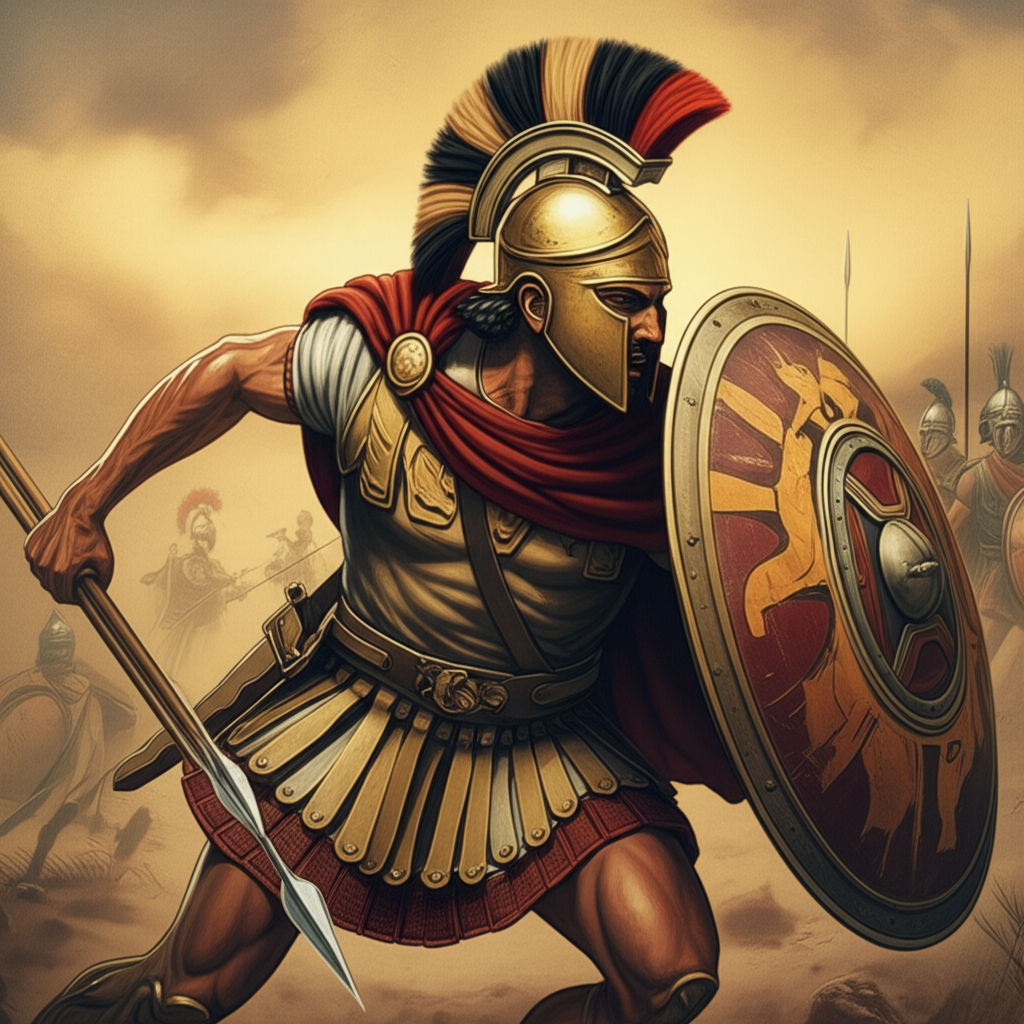
In an age dominated by the heavily armed hoplite, the emergence of the peltast represented a significant tactical evolution in Hellenic warfare. Originating from Thrace, these light infantrymen were defined not by their capacity for shock combat, but by their strategic mobility and effectiveness in irregular engagements. Equipped with a handful of javelins and the distinctive crescent-shaped shield, or pelta, they operated without the encumbrance of heavy bronze armor, granting them unparalleled speed on the battlefield.
The primary function of the peltast was not to break enemy lines through direct assault but to weaken and disorganize them from a distance. They excelled at harassing the flanks and rear of a slow-moving phalanx, launching volleys of javelins before retreating beyond the reach of hoplite spears. This form of attritional warfare exploited the fundamental weaknesses of heavy infantry formations, which lacked the flexibility to counter such fluid threats.
The true potential of peltasts was realized under the command of the Athenian general Iphicrates. During the Corinthian War, his reformed and highly disciplined peltast corps demonstrated that they could be a decisive battle-winning force. Their victory over a Spartan hoplite regiment at the Battle of Lechaeum in 391 BCE was a landmark event. It proved that well-led light infantry, when properly employed, could systematically dismantle and defeat even the most vaunted heavy infantry of the era, compelling a shift toward more balanced, combined-arms military thinking.