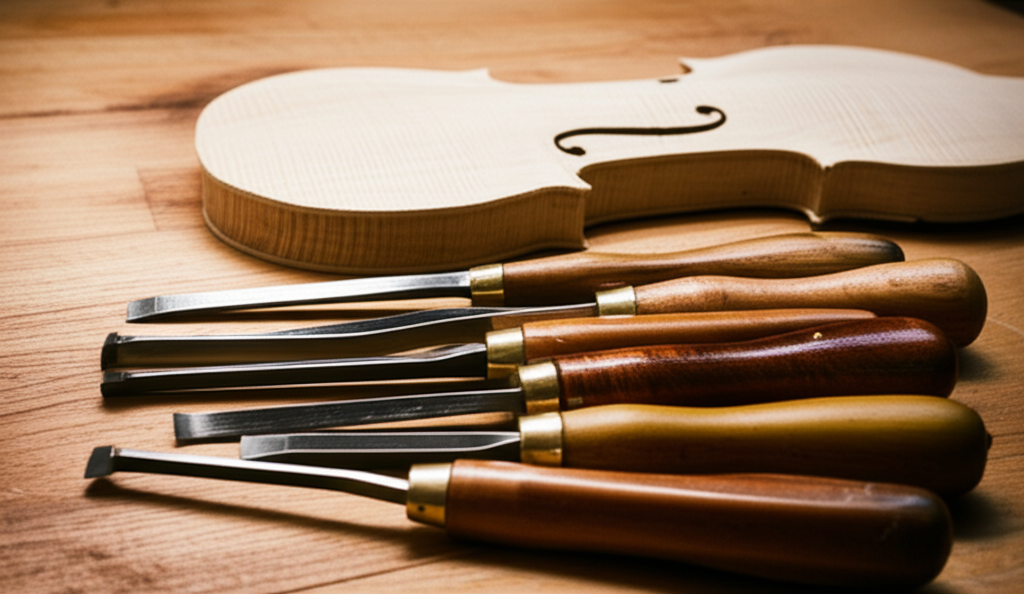
In the latter half of the 17th century, the city of Cremona stood as the undisputed center of lutherie, its reputation forged by the workshops of the Amati family. It was from this esteemed tradition that a young craftsman, Antonio Stradivari, began his work. His earliest authenticated instruments, dating from the 1660s, signaled the genesis of a new chapter in violin making. While these initial creations bore the strong influence of his master, Nicolò Amati, they also contained the seeds of a revolutionary departure from established convention.
Stradivari’s strategic genius lay not in outright invention, but in meticulous refinement. He commenced a systematic optimization of the Amati model, subtly altering the instrument’s geometry to enhance its acoustic properties. He experimented with a slightly longer and narrower form, adjusted the arching of the top and back plates, and refined the shape of the f-holes. These modifications were calculated to increase the instrument’s power and projection without sacrificing the tonal sweetness for which Cremonese violins were renowned.
A critical component of this evolution was the development of his distinctive varnish. This unique formulation, richer in color and more transparent than its predecessors, provided superior protection to the wood while contributing to the instrument’s resonant character. The origin of the first Stradivarius, therefore, was not a singular event but the commencement of a decades-long pursuit of acoustic perfection, laying the essential groundwork for the unparalleled instruments of his later golden period.