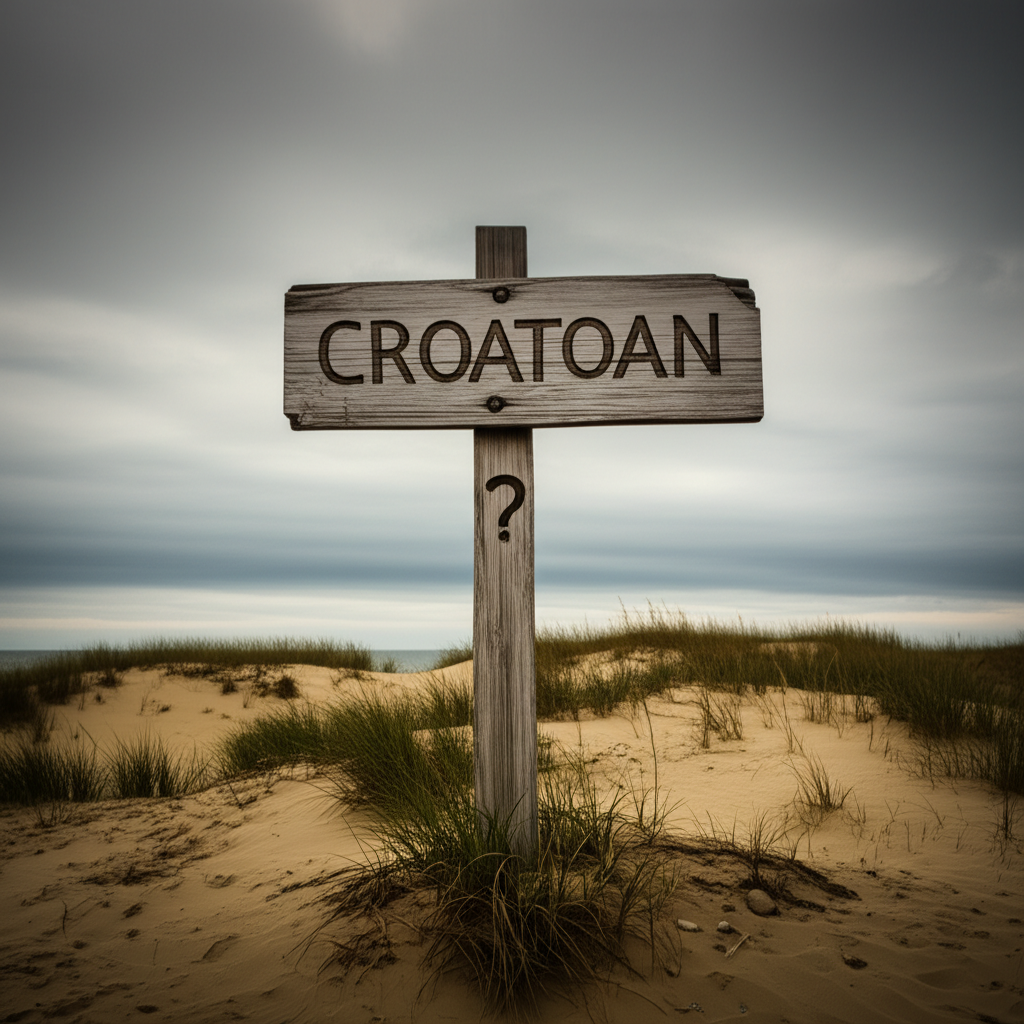
The return of Governor John White to the Roanoke colony in August 1590 revealed not a thriving English settlement, but a haunting silence. The fortifications had been carefully dismantled, and the entire population of more than one hundred men, women, and children had vanished without any sign of a struggle or battle. This discovery marked the beginning of one of early American history’s most persistent enigmas, often referred to as the Lost Colony.
The failure of the settlement can be attributed largely to critical logistical miscalculations. The colonization efforts, financed by Sir Walter Raleigh, were chronically under-supplied and strategically isolated. A crucial three-year delay in White’s return voyage, caused by England’s war with Spain, severed the colony’s only lifeline. This extended period without support would have exhausted their provisions and forced the colonists to seek assistance from local Algonquian peoples, with whom relations had previously been strained.
The only tangible clue left behind was the word “CROATOAN” carved into a palisade post. This was likely not a cryptic message but a clear indication of the colonists’ intended destination—the nearby island home of the Croatoan people. The absence of a Maltese cross, the pre-arranged distress signal, strongly suggests the relocation was deliberate and orderly. The most plausible historical interpretation posits that the colonists, facing starvation and abandonment, chose assimilation as their only viable strategy for survival. Lacking definitive archaeological proof of their fate, their story remains a powerful testament to the severe challenges of early transatlantic colonization.