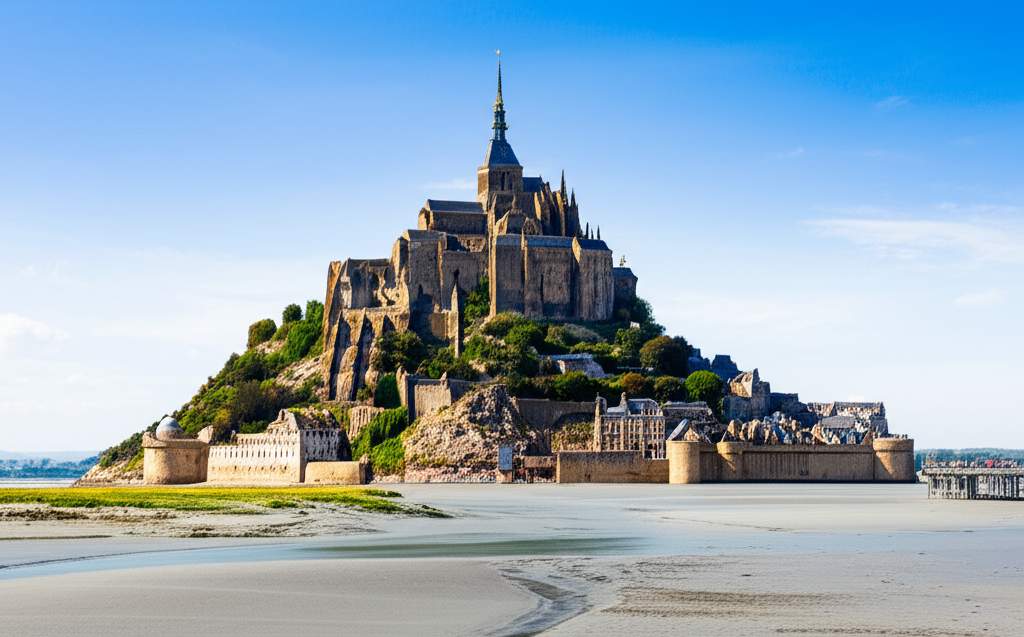
The architectural evolution of Mont-Saint-Michel represented a profound mastery of structural engineering constrained by formidable geography. Builders faced the challenge of erecting a monumental abbey upon a conical granite outcrop, necessitating a strategy of vertical stratification rather than horizontal expansion. Unlike traditional monastic layouts which spread across flat plains, the architects utilized heavy crypts as immense structural pillars to support the weight of the upper church, effectively wrapping the masonry around the rock itself.
This ingenuity culminated in the construction of La Merveille during the early 13th century. This Gothic masterpiece demonstrated a sophisticated optimization of space, stacking functional monastic areas—the cellar, knights’ hall, and refectory—atop one another. The daring use of flying buttresses allowed for soaring heights and ample light, defying the structural limitations typically imposed by such a precipitous foundation.
Strategically, the abbey functioned as an impregnable fortress, its defenses augmented by the rhythmic violence of nature. The bay’s extreme tidal range transformed the mount into an island twice daily, rendering traditional siege engines useless and trapping unsuspecting armies in shifting sands.
During the Hundred Years’ War, these natural defenses were bolstered by the construction of fortified ramparts and towers at the island’s base. The English forces, despite their military dominance on the mainland, found the combined obstacle of stone fortifications and the relentless sea insurmountable. Consequently, the abbey remained unconquered, standing as a testament to the effective synthesis of military architecture and environmental advantage.